
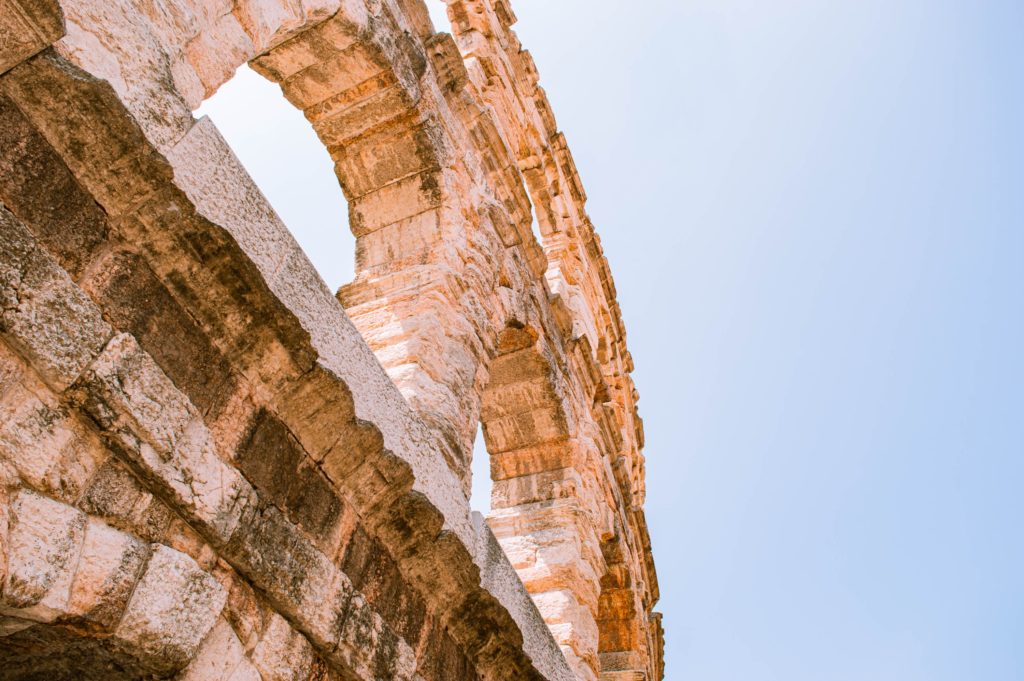
Recognized as a UNESCO World Heritage site since 2000, Verona is not only a millenary city of art and history but the heart of a province that breathes through its vineyards. This relationship manifests as a historical and social continuity that transforms every glass enjoyed in the shadow of the Arena into a direct extension of the surrounding hills and valleys.
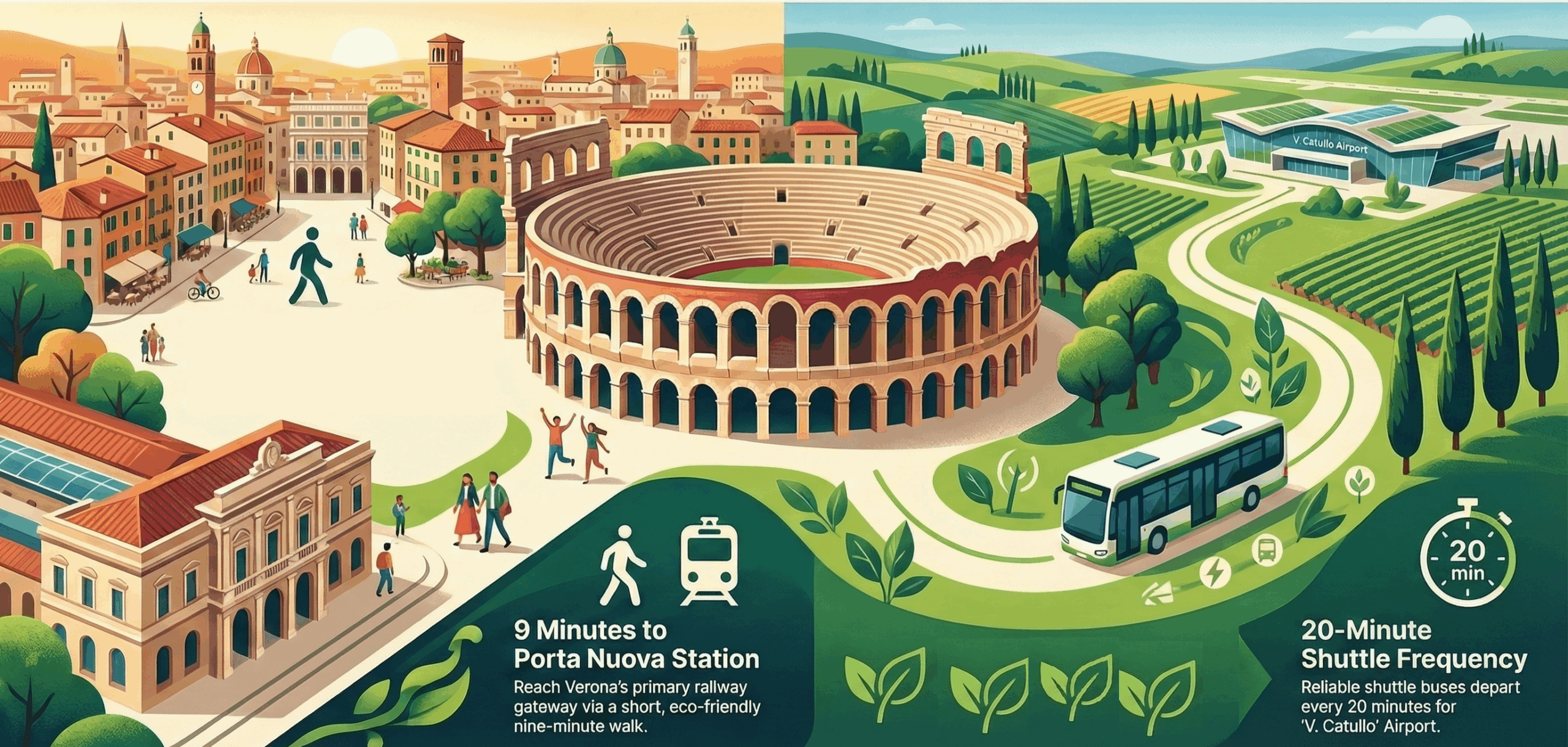
Logistics are supported by an infrastructure that connects transport hubs directly with the surrounding wine regions. Valerio Catullo Airport, located just 10 kilometers from the center, is linked to the Verona Porta Nuova railway station via the Verona Airlink service, which guarantees departures every 20 to 40 minutes, making international arrivals exceptionally smooth. This connectivity extends into the heart of the countryside via the local public transport network managed by ATV.
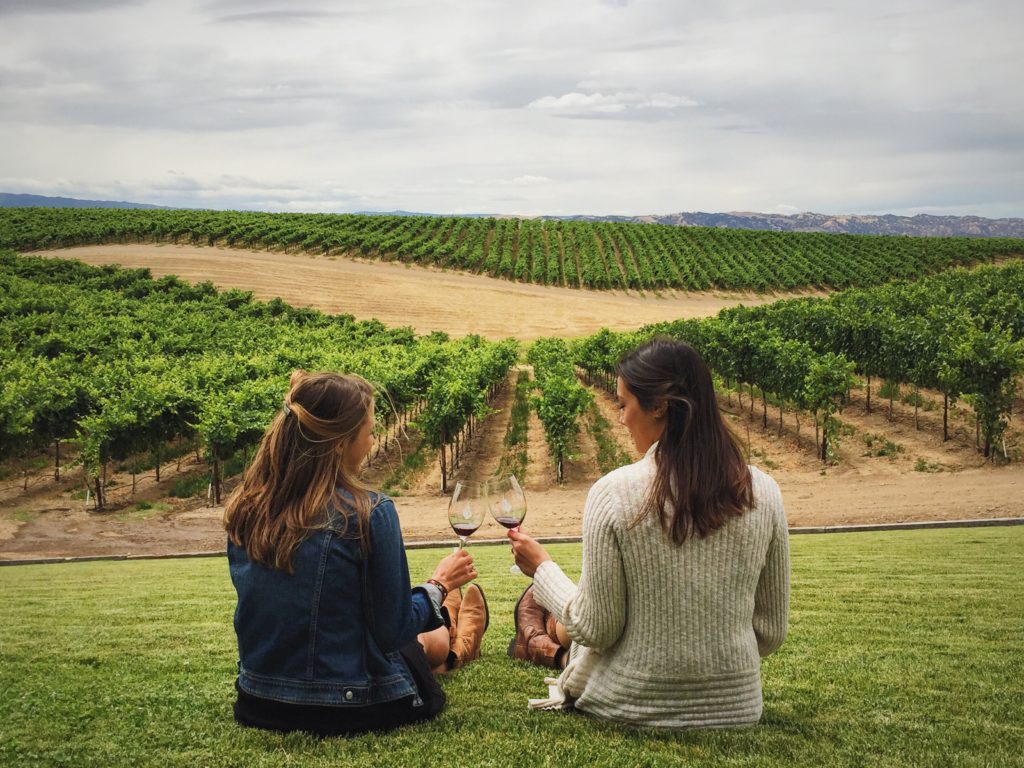
While many cities see their outskirts as a grey transition zone, Verona boasts a rural border that begins as soon as one crosses its historic walls. The Torricelle hills represent the city’s green lung, where the first urban vineyards begin just minutes from the center. Walking along the bastions, visitors observe the density of the historic center on one side and the opening of the hills on the other, marking a physical passage from urban life to agricultural traditions.
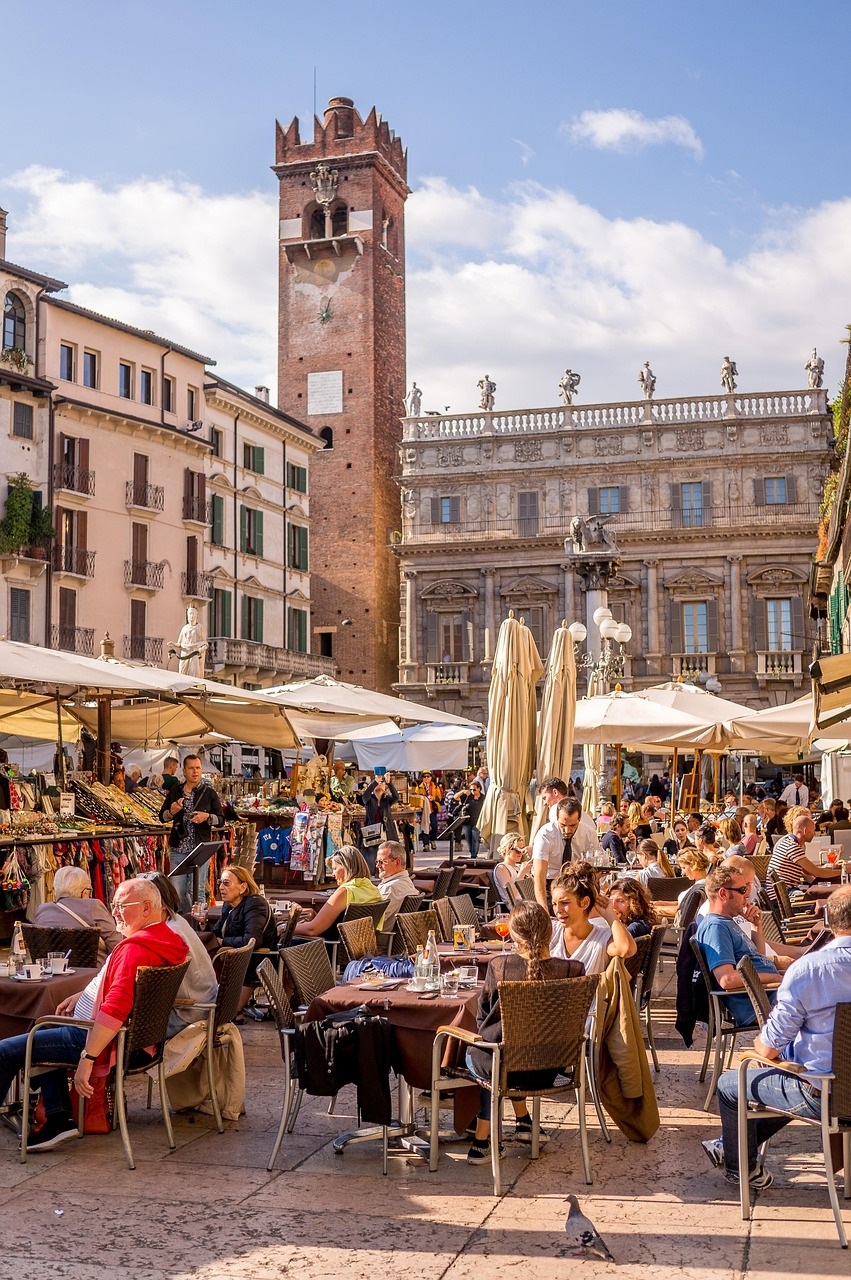
This culture of the vine also permeates the city’s ancient streets, finding its expression in the historic “Osterie“. Via Sottoriva (Sottoriva street) located “under the bank” of the Adige, preserves its medieval atmosphere with original arcades and cobblestones. Hidden under these porticoes are traditional taverns where time seems to have stopped and local producers supply the city with the finest expressions of the countryside. The convivial atmosphere of the Veronese osteria—halfway between a bar and a restaurant—allows visitors to complete their journey by tasting regional wines accompanied by traditional dishes.
This connection between city and country takes on its most vibrant social and sustainable dimension just 15 minutes east of the city in the hills of Marcellise at Terre di Pietra winery. Born from a family’s shared passion, this estate represents the professional and human journey of Cristiano, Anna, and Alice, who founded the project in a small garage in 2007 before moving to their current cellar in 2011. Terre di Pietra is a model of how a contemporary winery can become a catalyst for an entire local rural community. Placing biodiversity and natural winemaking at the absolute core of its philosophy, the farm operates with a deep ethical commitment to the land. Their approach is strictly artisanal: from pruning to harvest, every step is performed manually, avoiding heavy machinery and synthetic chemicals to allow the nature of the Marcellise valley to speak clearly through the wine.
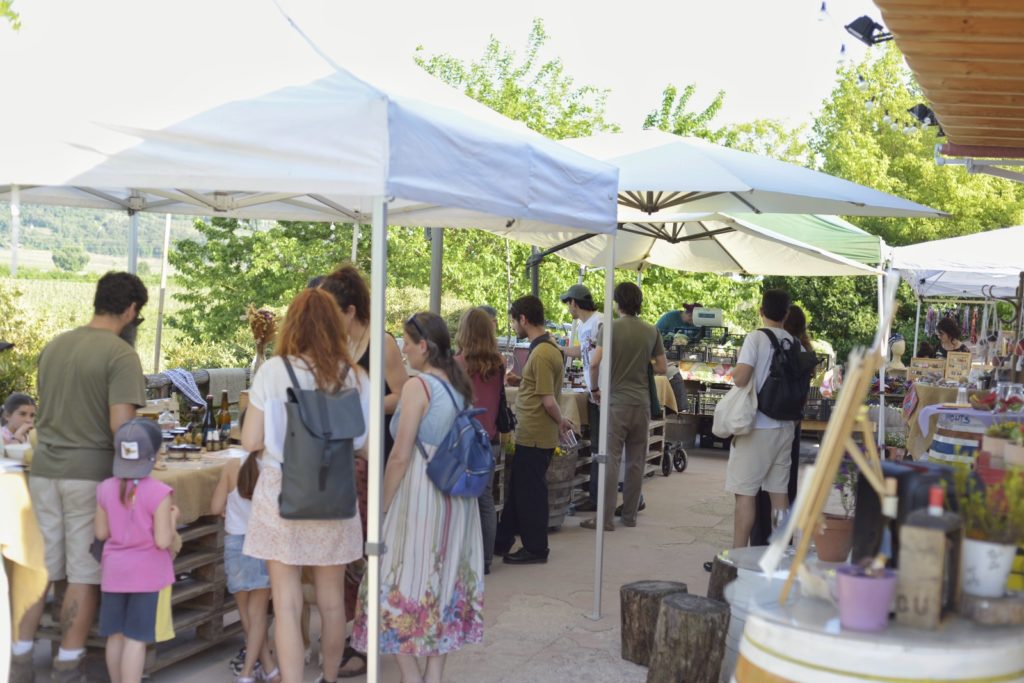
The estate’s most distinctive initiative is the Farmers’ Market (Mercato della Terra di Marcellise), organized every Friday afternoon in collaboration with Slow Food. This weekly market transforms the winery into a lively public square where between 10 and 15 small local farmers and artisans propose their products—ranging from seasonal vegetables and ancient grains to traditional crafts. It is a space where the urban public meets the producers directly, fostering a short supply chain that values the work of those who protect the Veronese landscape. The hospitality at Terre di Pietra is designed to involve visitors in this collective life.
Events like “AperiGypsy” further bridge the gap between urban residents and the rural world, offering music, workshops, and guided tastings in the winery’s garden. In this setting, the wine acts as a narrator for the entire territory, inviting dwellers from the city to rediscover the land through an ethical and convivial laboratory of shared values.
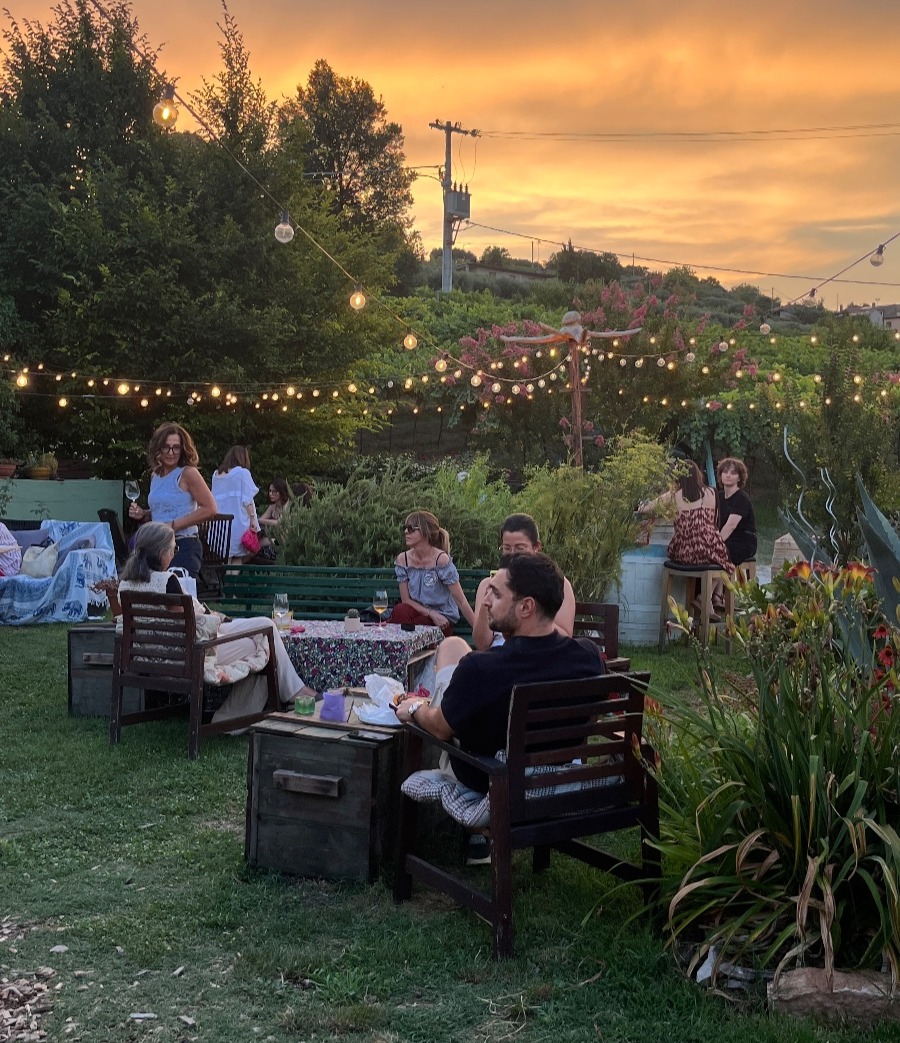
Through the example of Terre di Pietra winery, it is clear that innovation in hospitality comes through sustainability, inclusivity, and the active involvement of the local community. In Verona, a glass of wine remains a fragment of the landscape that finds its ideal stage among the millenary stones of the city of Verona.
Photo credits: courtesy of Terre di Pietra