
Value and volume Accessibility
Their wines have always been excellent value for money and, thanks to their size easy to find across many markets. They try to emphasis this ‘easy access’ in the style of wine they produce – pure, precise and fruity. Exactly what the market seems to be looking for right now. You’re very likely to find a bottle near you and I recommend looking out for one.
A pioneering lineage
This investment is the latest chapter in the history of a property that has embraced change and innovation since 18th century. Vines were planted at Domaine Perganson in 1719, a little later at Larose Trintaudon in Saint-Laurent-Médoc. More planting in the 1800s made this the largest vineyard in the Médoc, at the time when French and international retail markets were opening up. The Chateau was built under the ownership of Comte Ernest de Lahens, who also brough railways to the Médoc. It’s iconic tower is still visible today from miles around.
A history of firsts
The property is also a pioneer of certification, unsurprising perhaps as the current owners are the Allianz insurance Group, who bought the property in 1986. They believe third-party certification mitigates risk and is objective proof of their commitment to quality, the environment and social responsibility.
They are pioneers, Larose was the very first vineyard to obtain ISO 9001 certification in 1999 and by 2003, the first French vineyard to obtain both ISO 9001 & 14001.
In 2008, they were effectively guinea pigs for the AFNOR certification Engaged CSR (Corporate, Social Responsibility) – the first European vineyard and first Aquitaine company to qualify. By 2025, they were rated as ‘exemplary’ by AFNOR for the sixth time – a first for a European vineyard in the history of the certification.
Global Sustainability
Aligned with the vision of the United Nations Sustainable Development Goals, in 2007, they created the brand ‘Vignobles Responsibles’ (Sustainable Vineyards). They wanted a definition of sustainability that embraced production, employment and business. A property can’t be sustainable if it’s not making money. Something ringing very true in Bordeaux right now.
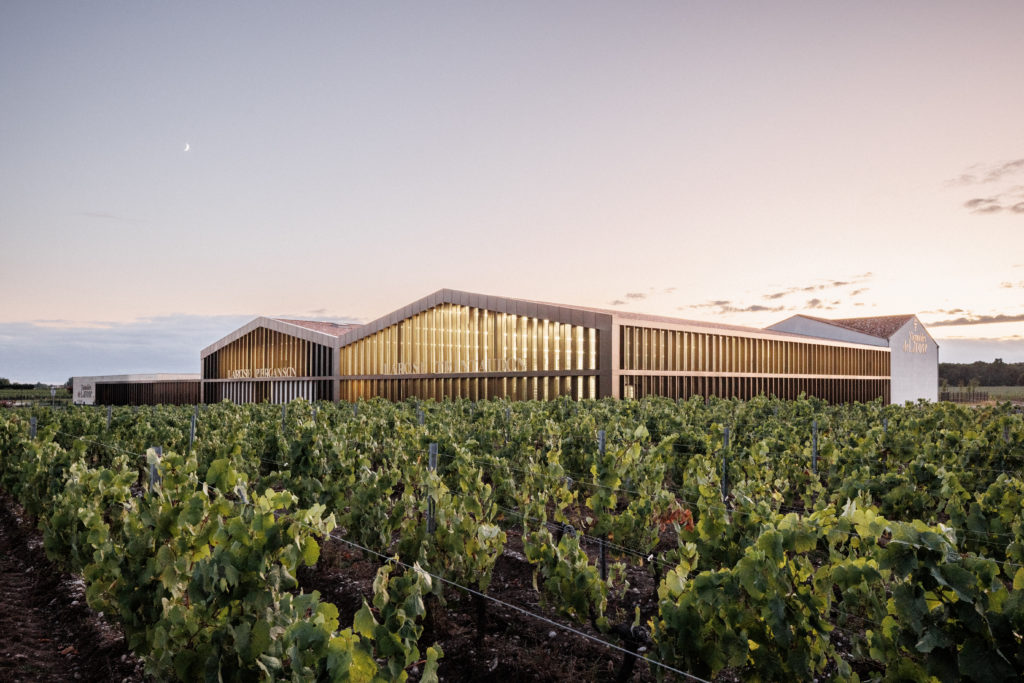
CHATEAU_LAROSE_TRINTAUDON_©11h45-HD-40
No weed killers or synthetic pesticides are used in the vines and 36% of the estate is dedicated to the preservation of flora and fauna. In 2022, working with Bordeaux start up Net Carbon they were the first vineyard to measure their carbon capture using infra-red and satellite images, right down to the calculating the contribution of each hedgerow planted for wild life.
Inside sustainability
The new cellar project was an opportunity to bring this sustainability philosophy inside, optimising electricity and water consumption. Innovative building materials increased insulation capacity 25 times compared to classic breeze blocks, large bay windows maximize natural light, (and the view for workers – it’s very cool) and 1850 m2 of solar panels now supply 60% to 70% of electricity consumption during harvest, and 100% the rest of the year.
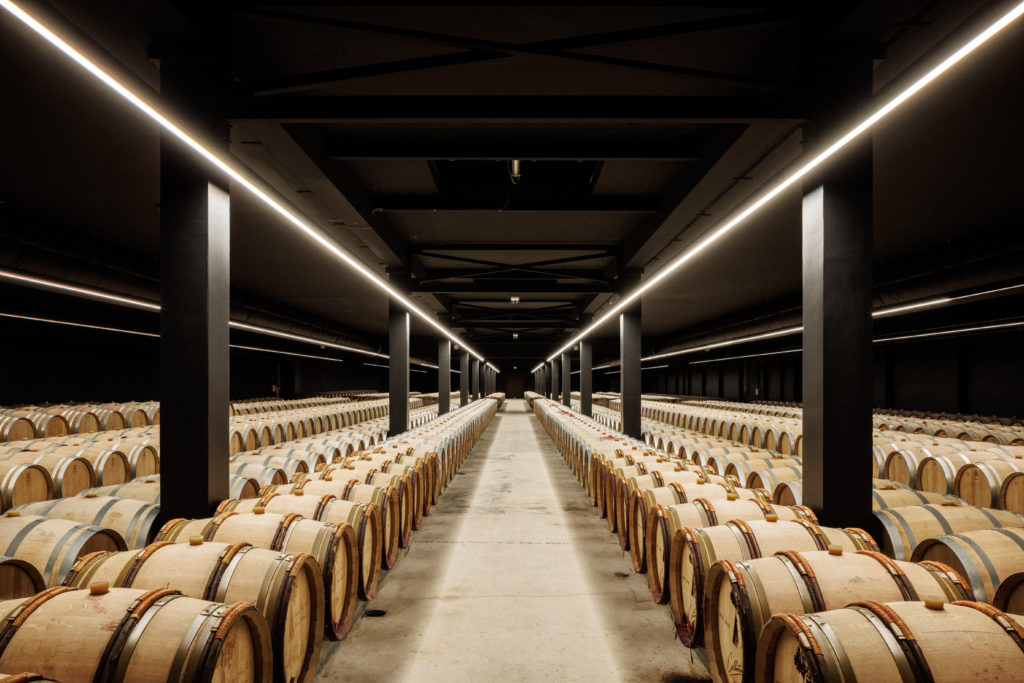
CHATEAU_LAROSE_TRINTAUDON_©11h45-HD-30
A 200 m2 water treatment plant provides recycled water for cleaning of agricultural machinery (they have the largest tractor garage of the region), reducing water waste to half of current standards. Green spaces have been redesigned, reducing lawns, favouring flowering shrubs to encourage bees to visit their beehives. Abandoning automatic sprinklers in the summer has reduced water consumption by half.
Two cellars, two chateaux
Delivered in 2023, there are two dedicated vat cellars in the new build, one for Château Larose-Trintaudon, the other for Château Larose Perganson. The new vats are less than half the size of the old, reducing plot size at Larose-Trintaudon from 7 to 2.5-hectares across the 190 hectares of vineyard and down to 1.7-hectare from 5 hectares for all 20ha of Larose Perganson.
Upcycle
Nothing is wasted, the older, larger vats are now used for blending. Even the glazed paper support from self-adhesive wine labels is collected and recycled for insulation – another first.
Taking the temperature
Adapting to climate change means managing rising temperatures, they can now chill all 190 hectares of harvest, by more than 10°C between sorting and vatting, even when grapes come in at around 30°C. No more night harvesting for workers, their signature freshness is preserved, and sulphur use reduced to 65 mg /litre – less than biodynamic certification.
CO2 recovery during vinification and their own nitrogen production protects the fruit, and two large (of course), air-conditioned barrel cellars help microbial stability during ageing.
Future forward
A small vat house with ten temperature controlled 13-hectolitre ‘cute cuves’ is devoted to experimental micro vinifications. They have also introduced new grape varieties. 2025 is the first vintage of their white Chardonnay, Semillon, Viognier blend, all grafted onto Merlot rootstock. It will be released next year as a Vin de France as these varieties chosen with rising temperature in mind don’t all fit into the new White Médoc appellation.
The in-house bottling line is sound insulated and wine is shipped in lighter 410g glass bottles sealed with technical corks.
People and place
The cellar was designed by for the technical team, and you can tell they are proud of the new cellars. As well as having fun with innovation, ease of production and safety were a priority. Walkways are replaced by work platforms, water and power submeters through the vat rooms mean no lugging and pulling pipes and tubes as well as gaging consumption, CO2 detectors and automatic ventilation all enhance safety.
There’s a staff sports and leisure room where a personal trainer offers bi-weekly classes keeping workers in shape. Wine making is physical work both in the field and the cellar. It‘s also an opportunity to create and reinforce community, although there’s a staff room for meals and more relaxed breaks and electric charging stations for staff cars.
Ongoing training
Training isn’t limited to physical fitness, there’s on-going professional training, leading to professional certifications. 100% of the vine workers have the ‘Diplôme Universitaire de Taille et d’Épamprage (university pruning qualification). The scheme is so successful their staff often get poached.
Size matters
They take their situation as the largest local vineyard seriously, very aware of their role as an economic actor of the Médoc. Aiming to grow in and with the region, over 75% of all purchases are made locally, and a partnership with the social inclusion agency Ares Coop has already led to five permanent jobs
Visitor Transformation
The chateau seized the opportunity of the new build to re think the visitor experience. Opened mid 2025, the wine tourism centre is open all year round, including Saturdays in the high season. It is open to all thanks to Tourism Handicap Label (yet another certification).
Aware that not everyone wants a full-blown wine tour, they encourage people to pop in for a self-guided immersive experience, no appointment needed. It’s accessible to all regardless of their level of wine knowledge and time constraints. It allows guests to visit at their own pace, short or long, depending upon their level of interest. They discover the history, seasons and terroir of the property thanks to clever scenography and videos before enjoying a tasting. In July and August visitors can also enjoy a bite to eat on the terrace or inside, all without an appointment.
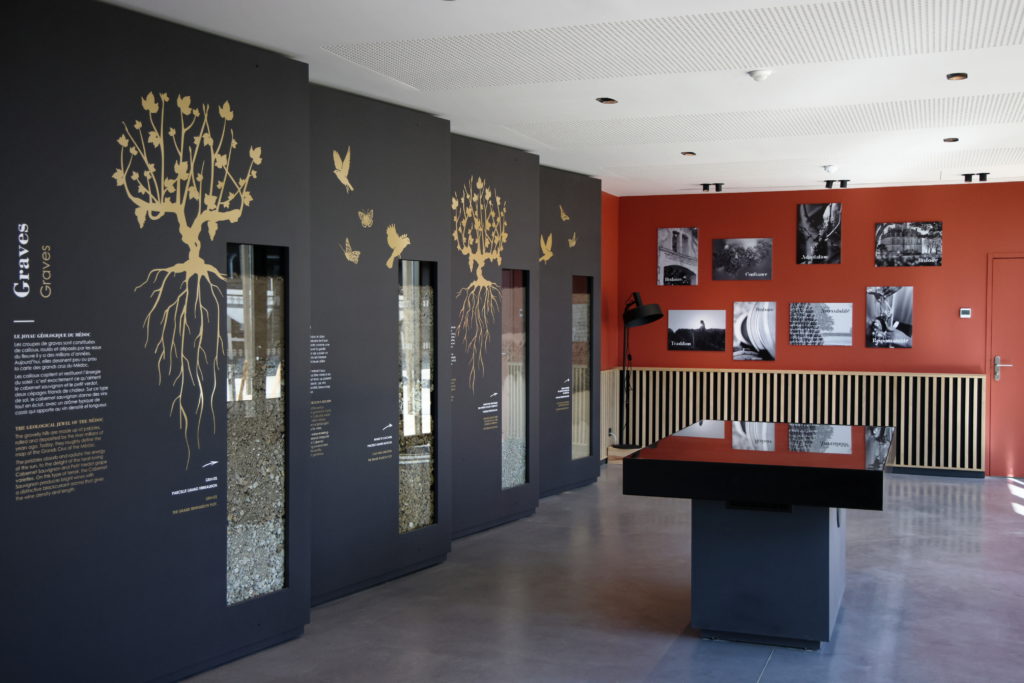
For enthusiasts who do want to dive deeper they cellars tours are available by appointment. Also designed to be accessible to all, lifts to raised walkways allow guests access to the impressive new cellars and views across the vineyards, even during the busy harvest time. There’s an opportunity to taste wines from all four properties of the group. The wines from the range are available to consume on site or take away and there’s an IRL/online combo to pre-order.
This new initiative, that shares their history of sustainability led them to win this year’s Best Of Wine Tourism Award for Sustainable Tourism.
Moving forward
Their broader vision of wine tourism includes being part of ENOTOUR, a European joint venture that offers online wine tourism training leading to certification (again!). They are the only French vineyard out of 18 partners across 4 countries, Spain, Italy, Portugal and France that brings together universities, vineyards, hotel schools and institutionals to raise the quality of wine tourism. Bordeaux partners are the ISVV (Université de Bordeaux), the Lycée de Gascogne and the CCI de Bordeaux (also at the origin of the Great Wine Capitals Best Of Wine tourism Awards). enotourproject.org
This year they finished the renovation of the 18th century Larose-Trintaudon, Chateau with 8 bedrooms, reception rooms and that famous tower.
Big and beautiful
Vignobles Larose is the CSR market leader with the certifications to prove it. It reflects a desire to make their wines accessibility to as large a public as possible but also to share their sustainable responsibility. They want to prove that big can be beautiful in terms of wine quality and price point whilst still protecting the environment and the people who work in it.
Author: Wendy Narby for Great Wine Capitals
Photos credits: ©11h45_ChateauLaroseTrintaudon
Video credits: ©fakhry_nader et ©schz.Farah