
Spanish wine lovers will immediately recognize Las Lías’ focus on wine. “Lías” in Spanish are “lees”, sediments found in wine after fermentation. These are mainly yeast cells but also other microorganisms that add creaminess and unctuousness to wine.
Las Lías Bilbao is on calle Juan Ajurriaguerra in downtown Bilbao, an area known for its bars where people congregate for the popular tradition of “aperitivo” – a couple of glasses of wine and a “pintxo” before lunch.
Las Lías was the winner of the 2026 Best Of Wine Tourism award for a Restaurant from Bilbao-Rioja.
The owner, Mikel García prefers to call his place a “gastrobar” rather than a restaurant. It’s a space with a counter lined with bottles of wine, beer taps and a range of pintxos, several high-topped tables along one wall and a small space in the back with several tables for sit-down meals.
We recently visited Las Lías to sample the six-course tasting menu and wine pairing option but first met in the front with some friends to have a glass of wine and watch the place fill up with customers having their “aperitivo”.
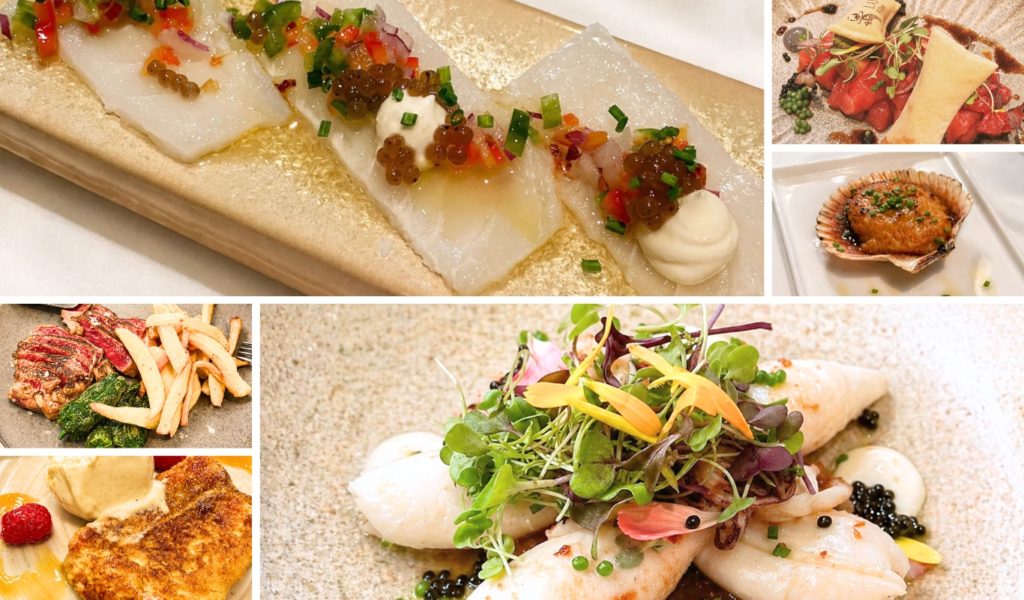
Las Lías Bilbao Restaurante Tasting Menu. Photos: Tom Perry
Mikel García describes his establishment as featuring local products, carefully selected wines and warm, personal service focused on wine culture. He is the son of chef Daniel García, a winemaker and sommelier with more than 20 years’ of experience in the Zortziko restaurant group that includes Zortziko, El Viejo Zortzi and Atea.
While we enjoyed our “aperitivo” we watched as cases of wine were delivered, unboxed and arranged on shelves above the tables. We were surprised that the wines came from everywhere, not just Rioja or other Spanish regions. This was a clue that our wine and food pairing experience was going to be special.
As a starter we had a thin slice of cod, lightly marinated with truffle oil. This dish was paired with Maldita La Hora (The Damned Time), a sparkling white from the neighboring coastal region of Cantabria, vinified with albariño and godello, well-known northern Spanish white varieties and riesling. This last variety added depth and mouthfeel to the blend. An interesting combination of fruit and acidity that went very well with the rich flavor of the cod.
Our second dish was a red tuna tartare with wasabi, a daunting dish to pair with a wine. This was pulled off brilliantly with Hortanza, a white from the coast of Cantabria, vinified with riesling and gewürztraminer. It was going to be interesting to see how these classic German varieties, planted in their native habitat on steep banks above the great wine rivers in Germany, but planted here near the Bay of Biscay, would work. My tasting note simply said “Great Match”!
The third dish was a scallop in its shell stuffed with spider crab meat, paired with a familiar white from Rioja – Monopole, one of Rioja’s most famous. This Monopole, however, was vinified using the original grape varieties from the early 20th century blend: viura and palomino (a white variety prevalent in sherry.) The wine was aged in 500 liter sherry butts. Scallops and stuffed spider crab are favorites throughout northern Spain.
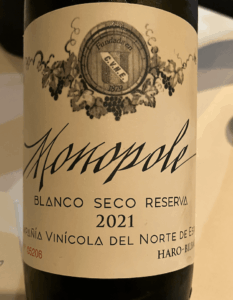
Monopole Clásico 2021 Reserva. Photo: Tom Perry
The pungent aroma of the white wine and the luscious mouthfeel made for the perfect pairing with the complex taste of of this classic Spanish seafood combination.
Dish number 4 was grilled baby squid with roasted vegetables. It was paired with Bajo Velo Flor, a moscatel de Alejandría from Manilva in Málaga, and vinified for four years under a layer of “flor” (yeast cells that form a barrier to impede contact with the air) – similar to how fino sherry is made – by Las Lías’s Mikel García. Only 100 bottles were produced. Our feeling was that we were sitting in a “chiringuito” (a beach bar on the south coast) enjoying grilled squid. Normally, the squid would overpower a chilled unaged white, but the complexity of Bajo Velo suited the dish perfectly. A fino sherry would have worked, too but García’s creation, with moscatel, was interesting.
Our meat dish was slices of beef entrecôte from the Frisona (Holstein) race of cows raised in Galicia that we cooked ourselves on a hot griddle. This breed of cattle and how the animals are raised and fed, make them the most sought-after beef for ageing and grilling for meat-crazy Basques. The meat is marbled with layers of fat that make a mouthwatering, complex steak when aged. The wine García chose to go with this dish was a surprise from multiple points of view: it was a young red txakoli from the Bizkaiko Txakolina DO called Beltza (literally ‘black’ in Basque but used to describe a Basque red). Very high acidity with a blackcurrant nose. Txakoli is almost exclusively vinified with a native white variety (hondarribi zuri).
On the other hand, hondarribi beltza is believed by some ampelographers (scientists who identify, classify and describe grape varieties) to be a precursor of cabernet franc.
Note: zuri is “white” in Basque.
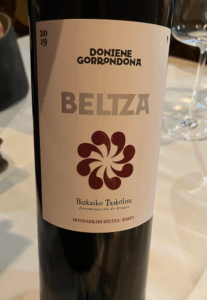
Beltza: a red txakoli. Photo: Tom Perry
After this five-course feast it was time for dessert. García offered us torrijas (‘French toast ‘in English is a poor approximation – the French ‘pain perdu’ comes closer to the essence of this dish – day-old bread soaked in eggs, milk, cinnamon and other spices and then fried. It is usually served with ice cream and fruit.
García saved a surprise – ORDA – which he vinified himself from muscatel de Alejandría from Manilva. The base wine is the same as Bajo Velo but in this case the vinification was completely different with the “flor” broken up with the young wine in contact with the air for eleven years. It reminded me of a palo cortado from Jerez (but with moscatel de Alejandría rather than palomino). A great dessert wine to go with a classic dessert!
After the “aperitivo” crowd left for lunch we were fortunate to be only one of two tables of diners. The other table was a trio of young Basque businessmen who ate beef and drank red Rioja. García left them alone and spent a lot of time explaining his philosophy and projects. He is proud to have won a ‘Best Of Wine Tourism’ award and prominently displays his winner’s sign in the window of the restaurant. The brass plaque awarded at the ceremony is behind the counter.
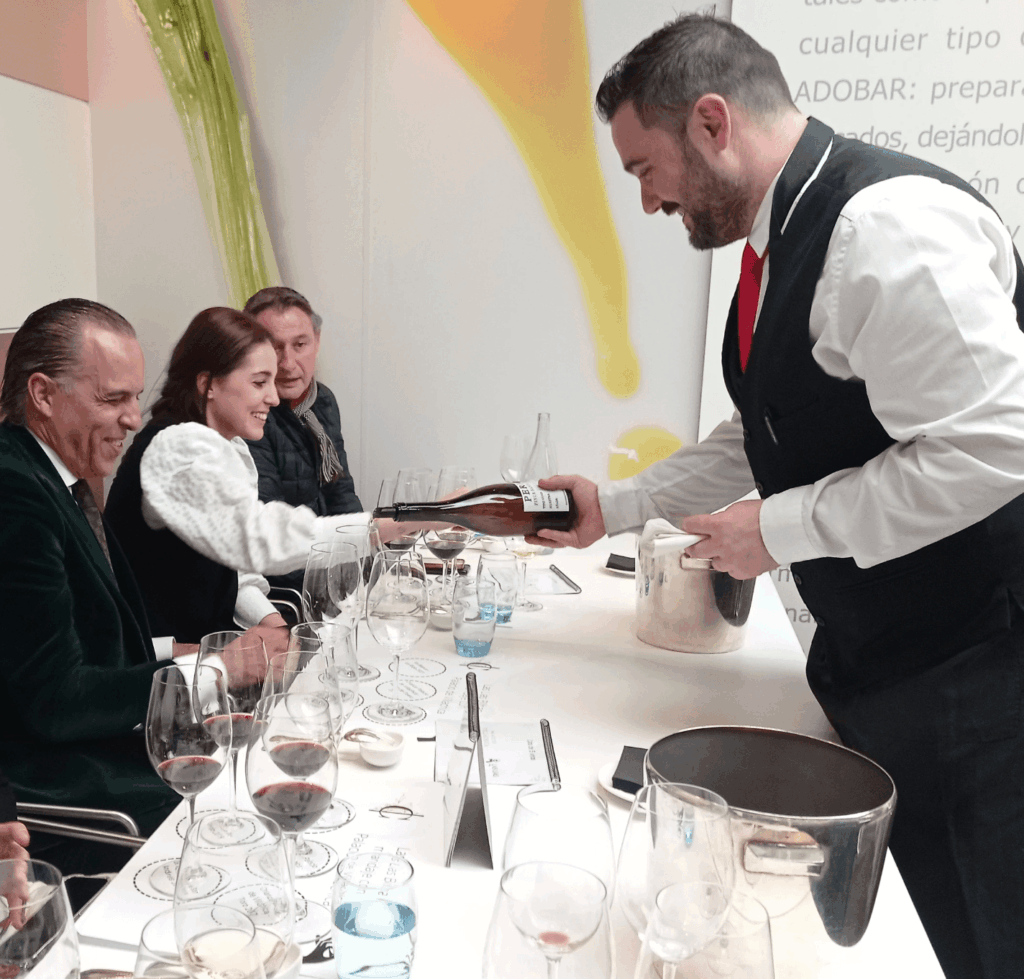
Mikel García. Photo: Las Lías Bilbao
Las Lías is a great place to go for an aperitif, with a wide range of wines from lots of different places as well as a great selection of ‘pintxos’ and plates of local produce to share. Don’t overlook the restaurant, however, as Mikel García and his team prepare an interesting range of dishes as well as a tasting menu that changes several times a year. I guarantee that you will not only eat well but will learn a lot about wine!
Juan de Ajuriaguerra, 14
48009 Bilbao
Tel. +34 946 96 42 40
___________
Text by Tom Perry, Inside Rioja
Featured photo: Las Lías Bilbao
Learn more about Bilbao-Rioja Great Wine Capitals