
Church Road sits on the edge of Taradale, a short run inland from Napier, and it has been making wine on this exact site since 1897. Not on a site nearby, not under a name later revived by somebody who bought the trademark. Here. That makes it one of the oldest continuously operating wineries in the country, and after nearly thirteen decades the place carries itself with the quiet confidence of somewhere with very little left to prove.
The story starts with Bartholomew Steinmetz, a Luxembourg immigrant who planted vines to supply wine to the Marist Brothers at the nearby Catholic mission. It was practical work, not romantic. What turned it into something larger was a teenager who arrived to wash bottles in 1921.
Tom McDonald stayed sixty-five years. He bought the place, ran it, and spent most of the twentieth century arguing that New Zealand could make serious red wine. In the 1940s he was working with Cabernet Sauvignon when the national palate ran to fortified sweet wine and not much else. He was awarded an OBE. He is now routinely called a founding father of the modern industry, which is the sort of phrase that gets attached to people after they die and rarely means much, but in his case it happens to be accurate.
Most wineries with history put it behind glass. Church Road put a tasting room inside it.
McDonald’s old concrete fermentation tanks have been converted into an underground wine museum, and the estate’s flagship experience takes place down there. The TOM Experience, named for him, is a seated flight of the icon range; current releases alongside back vintages pulled from the cellar, served with savoury bites in a room that is cool, dim and almost completely silent. Numbers are kept small and you need to book ahead. The museum also holds a collection of drinking and winemaking artefacts, some of them more than three thousand years old, which puts the estate’s own century and a bit into a slightly humbling context.
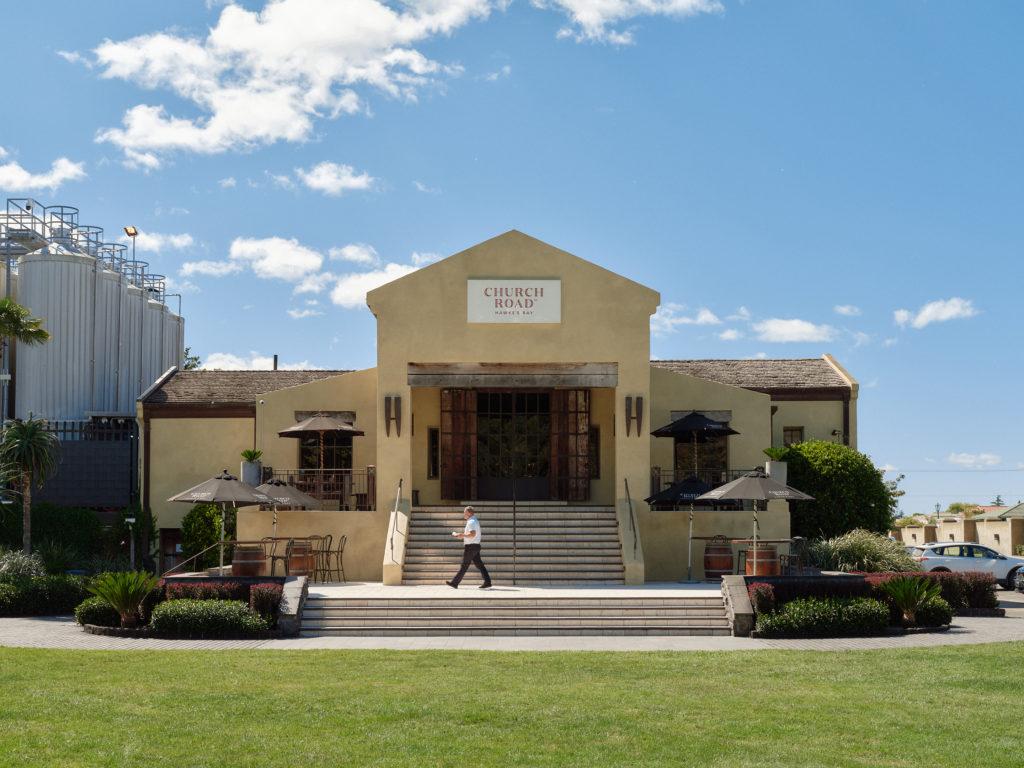
The fuller tour is the Legacy Experience: barrel halls, the caves, the museum, and a properly guided tasting at the end. If you would rather not be led anywhere, there is a self-guided walk through the grounds that takes in the heritage buildings, the sustainability work and the native regenerative plantings the estate has been putting in around the property.
For a shorter visit, the cellar door runs four tastings pitched at different levels of commitment. Inspired by the Bay covers the Grand Reserve wines. Editions is the interesting one for anybody who thinks they already know what Hawke’s Bay does; small-batch, uncommon varieties, alternative styles, things made in quantities too small to reach a shop shelf. Flavour of Place works through the single-vineyard Church Road 1 wines, made with as little intervention as the fruit will allow. Icon goes to the top of the range.
Presentations are available on iPad in Chinese, Korean, French, Italian and Spanish, which sounds like a small thing until you have watched a visitor with limited English be talked at for forty minutes by a well-meaning host
Chris Scott arrived in 1998 as a cellar hand and has been chief winemaker since 2005. The house style under him leans on traditional technique – barrel work, patience, texture built rather than added, applied to Merlot, Syrah, Cabernet Sauvignon and Chardonnay off Hawke’s Bay’s gravels. He works alongside Graham Bartleet on the vineyard side and Tetsuaki Ishibashi in the winery, a team that has largely stayed put, which in an industry of travelling winemakers is unusual enough to notice.
“You are always aware of who was here first. Tom was making Cabernet in this country when nobody else thought it was worth the trouble, and he was right. What I try to do is fairly simple: use the techniques that have been proven over a long time, don’t rush anything, and let the fruit from a particular block say what it wants to say. The wines that come out of here should taste like Hawke’s Bay and they should taste like Church Road. Getting both at once is the whole job,” explains Chief Winemaker, Chris Scott.
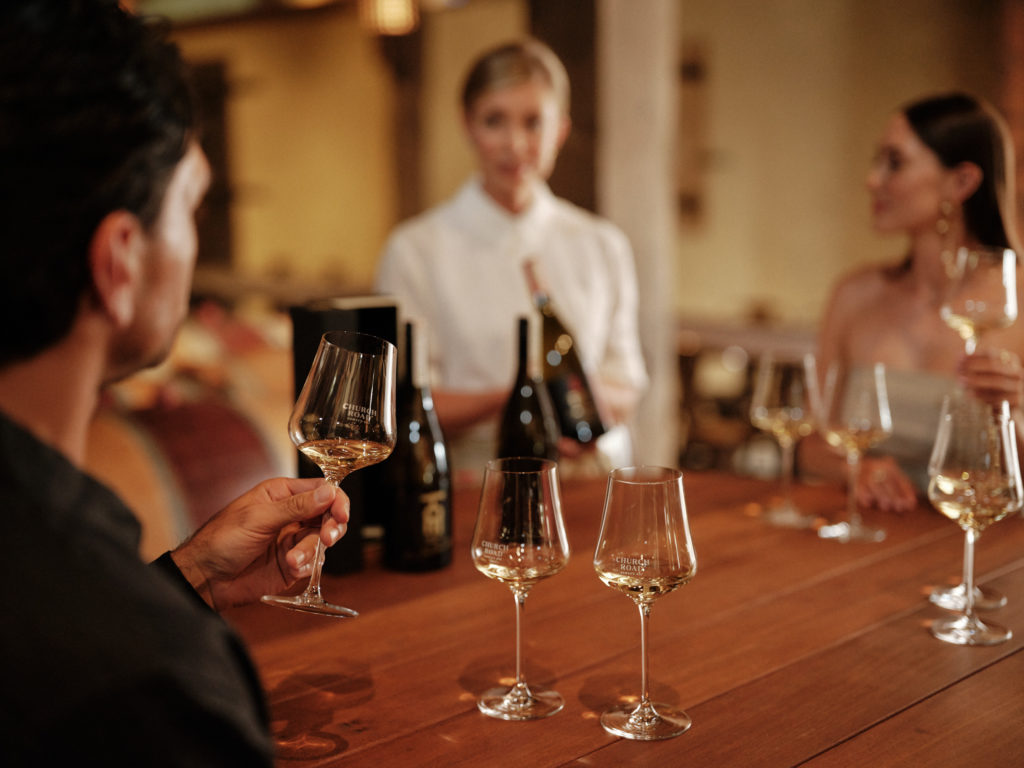
Visiting Church Road is entirely up to you. You can turn up, taste four wines, and be back in the car in half an hour. Or you can spend an afternoon underground in a converted concrete tank, drinking wine made from vines a few hundred metres away, in a place where somebody has been doing this since before the First World War. Both are the same winery, run by the same people, on the same day.
Very few estates manage that range without one end of it feeling like an afterthought — the quick tasting treated as a nuisance, or the premium experience bolted on to justify a price. Church Road has had a long time to work out the difference, and it shows in small ways: the staff who know which back vintage is drinking well this month, the museum left dim rather than lit up for photographs, the walk through the native plantings that nobody tries to sell you anything on.
Learn more about Hawke’s Bay Great Wine Capital
Photos provided by Church Road Winery