
Pauillac is famous for some of the world’s best Cabernet Sauvignon blends, home to three of the five first growths of the 1855 classification.
Did you know, the appellation takes its name from a town on the banks of the Gironde Estuary? Built on roman foundations, midway up the Medoc peninsula on the ‘route des chateaux’, visitors often drive through this waterfront town. Now, thanks to the spectacular renaissance of Château Grand-Puy Ducasse, it is once again well worth a stop-over.
Renaissance
This stunning reinvention took 10 years of planning and 3 years of renovation, all the more challenging because of its town-centre location. This is an urban winery.
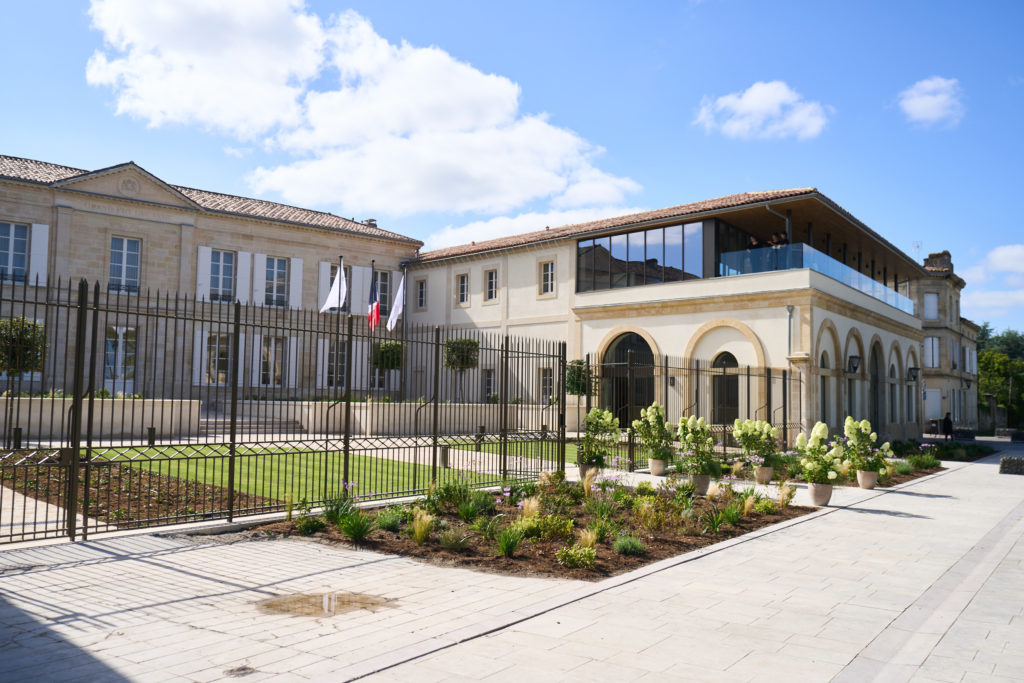
Their desire was to not only to create a technical winery but also to create a space to give visitors a ‘Grand Cru Classé’ welcome.
A History of place
The original ‘modest waterfront house’ was bought by Arnaud Ducasse in 1675. Little did he know that his name, added to that of a plot of vines, was the beginning of a vineyard that would remain in the family for 300 years!
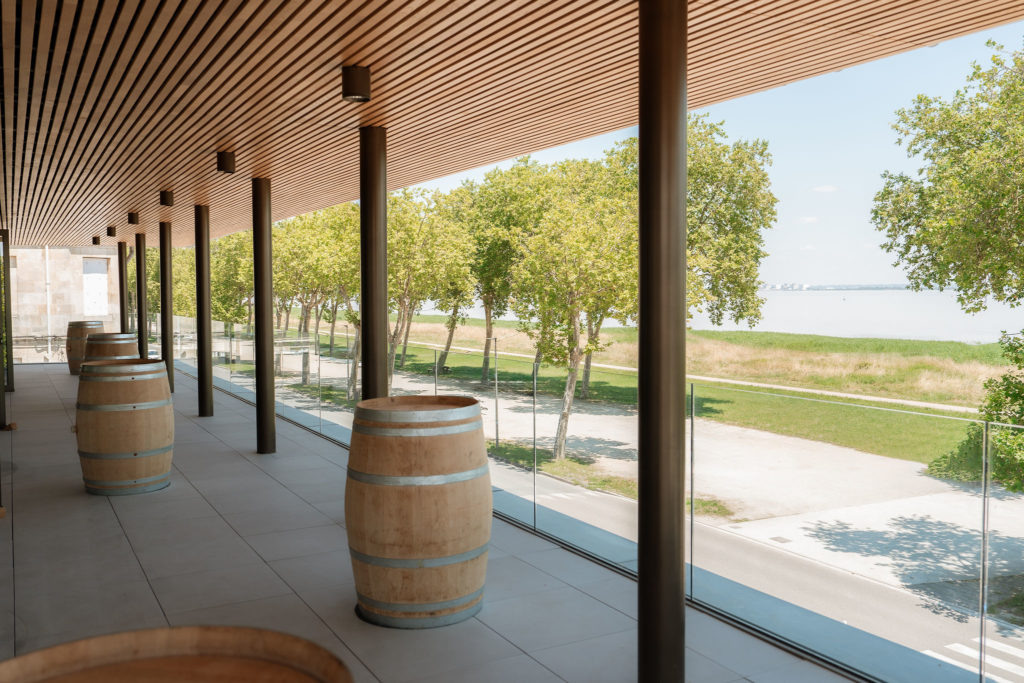
The grand waterfront chateau we see today was built in 1820. CA Grands Crus, part of the Crédit Agricole, bought the property in 2005. Under their leadership, the property launched this innovation and restructuration in both the vines and in the buildings.
Urban winery
The ‘down town’ location and view over the Gironde Estuary are a plus for visitors, but not without challenges for the renovation project. Space was limited and had to be cleverly used, especially as they wanted to create a unique space to welcome visitors.
They found an original solution: 46 beautiful, shiny stainless-steel vats are suspended from the ceiling of the cellar, allowing them to double the number of vats, increasing plot-by-plot vinification whilst remaining with the historical footprint of the buildings.
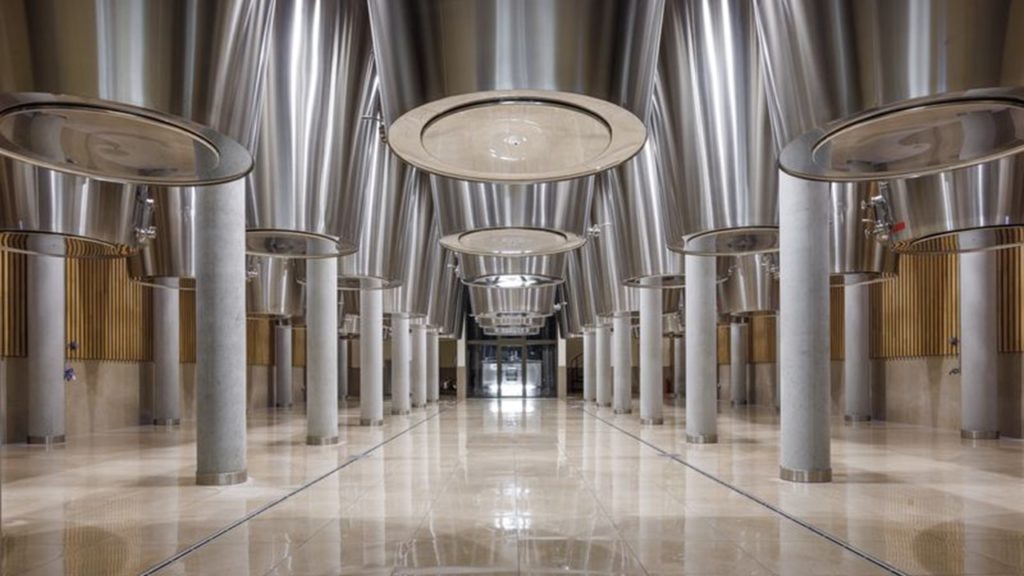
This wasn’t the only constraint. A sculpture of wild swallows flies amongst the suspended vats, a tribute to these protected birds that had to be rehoused before construction could continue – holding up the opening by six months!
All Pauillac in one bottle
Despite this location in the centre of the town, terroir is not forgotten. On the contrary, what makes Château Grand-Puy Ducasse so unique is the origin of the grapes – where the vines are planted. Unlike many chateaux, surrounded by their vines, the wines of Grand Puy Ducasse come from five different vineyard plots throughout the Pauillac appellation.
With the central location of the winery vital in bringing everything together, these different terroirs represent and express the full complexity of this prestigious appellation.
From the Gravel outcrops of the north near Château Pontet-Canet and Château Mouton Rothschild, where some of the best-drained soils perfectly suit Cabernets Sauvignon, to historical sandy-gravel plots in the centre that bear the name Grand-Puy, and the ‘Artigues’ plot, which was the original name of the property when it was classified; and to the south near the Pichons where cooler sandy-clay soils allow Merlot and Petit Verdot to thrive.
2025 also sees the first year that all these plots are cultivated organically, a process that started with experiments back in 2014.
Why now ?
The 350th anniversary seems an appropriate milestone to introduce this rehabilitation of the historic site, and for the first time, to open the doors of the 19th-century château to the public.
Living history
The chateau holds the history of the property. Before reaching the new cellar, visitors are invited to stroll through the beautifully renovated salons of the 19th-century chateau, a visit that takes them on a journey through several centuries. The scenography is cleverly illustrated by fascinating documents that show the success of the property at exhibitions and it’s place on official dinner menus from Paris to Bordeaux and London and, of course the classification of the property in 1855.
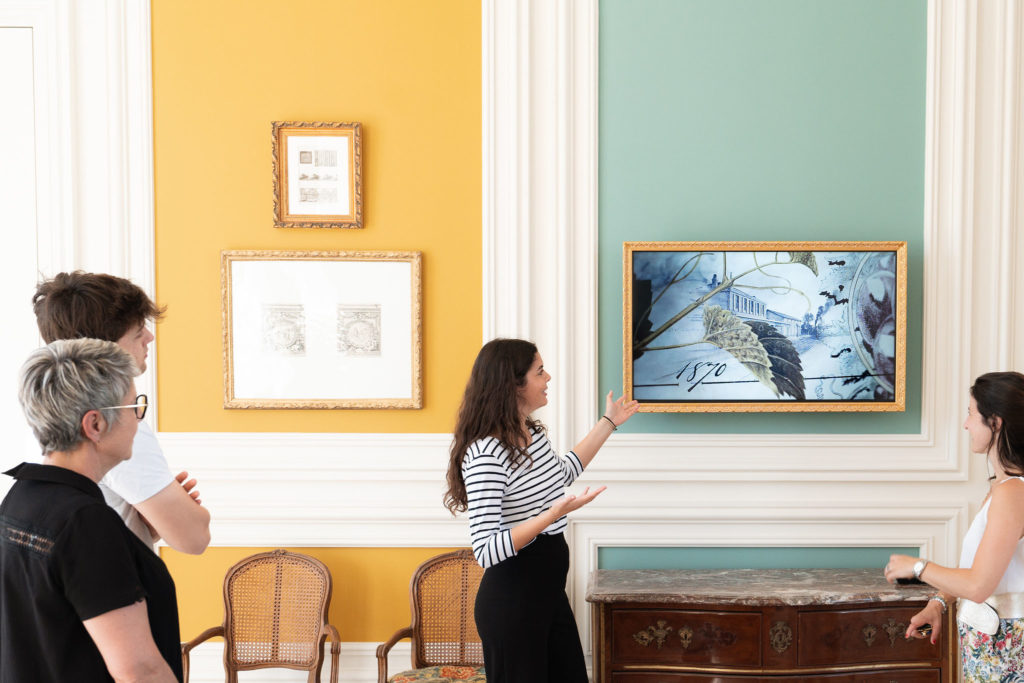
Maps, ancient documents, photos and stunning posters from ‘Belle Epoque’ exhibitions outline the intimate links between the property, the town and the whole Bordeaux region links forged thanks to this unique waterfront situation. These maritime connections were key to the success of Bordeaux wines throughout the world.
Transatlantic
The tour shows Pauillac as an elegant waterfront station in its 1890s heyday, home to the French ‘Compagnie Générale Transatlantique‘ cruise-liner terminal where transatlantic passengers embarked and disembarked.
There’s another special connection for American visitors: in 1777, the Marquis de Lafayette set sail from Pauillac to America to become a hero of the American war of independence.
A view of history
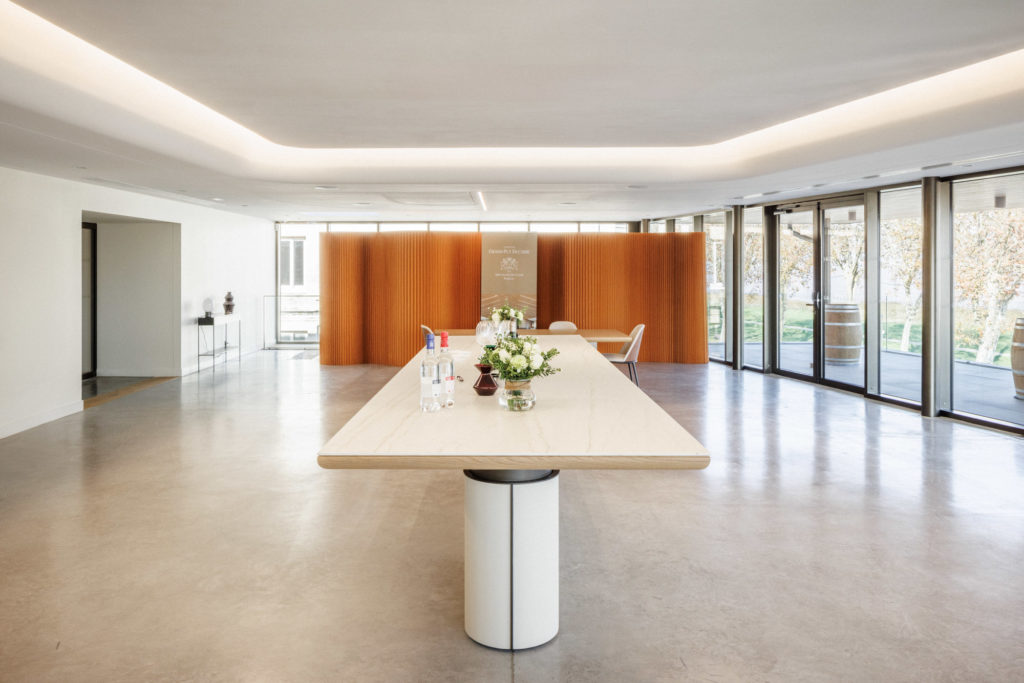
Visitors are reminded of the ocean-going theme at the end of the visit in the panoramic room above the cellars overlooking the Gironde. A reminder of the importance of the estuary and the maritime access it afforded for the renown of Pauillac Bordeaux wines throughout the world.
Walk in welcome
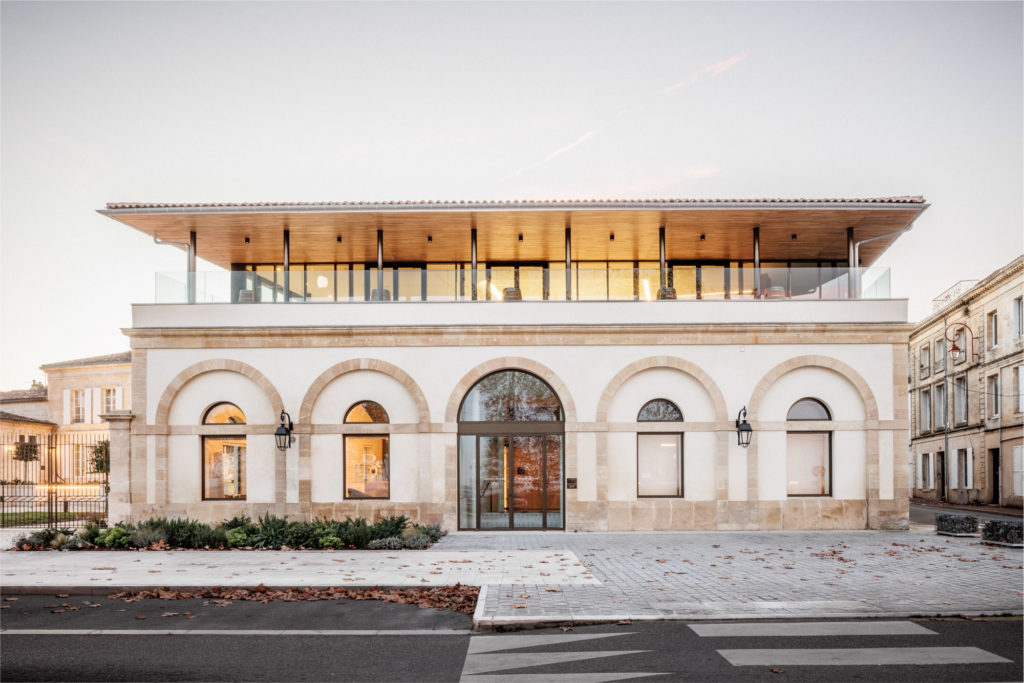
The renovation of the chateau and the cellars has brought new life to the town’s waterfront. The space is designed for wine making but also with guests in mind. A boutique and tasting space at ground level, is open to visitors without an appointment, accessible directly from the waterfront now planted with gardens.
Welcome friends
In 1919, the label of the château carried the coat of arms of the Duroy de Suduiraut family, then owners. Their motto reads REGIS SEMPER AMICI: Friends forever. This perfectly illustrates the warm welcome at Château Grand-Puy Ducasse today, where they are proud to share the new and stunning version of this historic property.
Author: Wendy Narby - Insider Tasting
Photos credits:©ChâteauGrandPuyDucasse
Video credits: ©fakhry_nader et ©schz.Farah