
From Vineyard to City Square
On a warm evening in Mainz, wine feels more like a shared language than just a product. People gather by the Rhine, glasses in hand, talking and laughing easily. Rarely do they discuss grape varieties or vintages. Wine here is not something to be explained but something to be lived.
This everyday presence of wine is not by chance. It does not stop at the city limits. Mainz, though modest in size, exerts a profound influence. The city shapes how wine is presented, discussed, and understood. Rheinhessen is rural at its core, defined by villages, family estates, and agricultural rhythms. Yet, it is in constant dialogue with urban life. Distances are short, both physically and mentally. The exchange between city and countryside happens daily. Conversations, expectations, and changing lifestyles foster this exchange.
This interaction offers an instructive perspective. Wine regions no longer operate in isolation. Urban proximity has become a creative force, not a threat to authenticity.
Architecture and wine: Manz winery
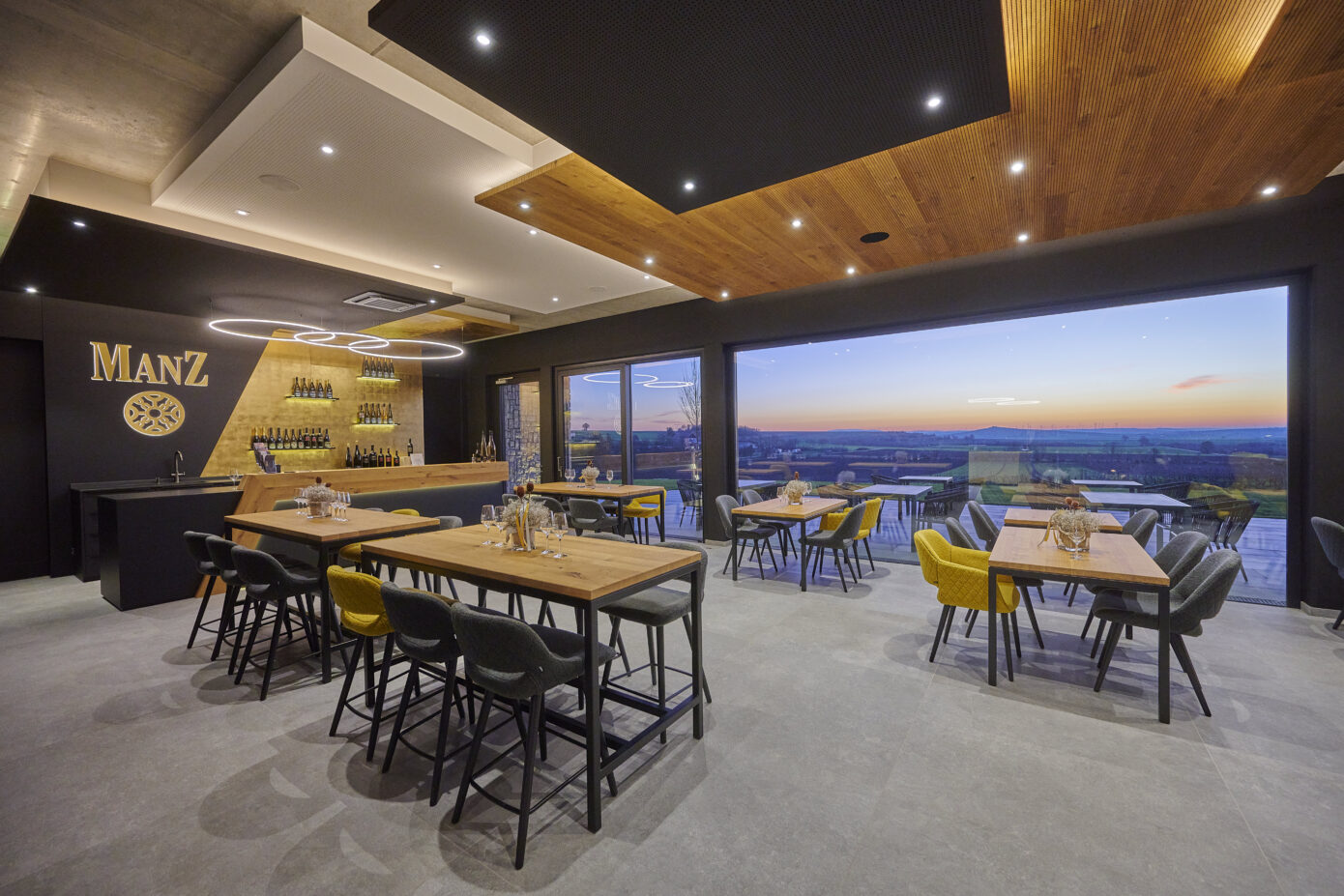
Weingut Manz, in the quiet village of Weinolsheim, doesn’t look like a traditional rural winery. Its architecture speaks a contemporary language of clean lines, exposed concrete, and expansive glass. It deliberately breaks with the romantic imagery often associated with countryside wine estates.
This design choice is not a provocation. It’s about confidence. The winery acknowledges that many visitors arrive with urban visual habits. They’ve been shaped by galleries, modern restaurants, and contemporary design spaces. Inside the winery, the experience feels curated but not distant. It is carefully structured yet open. Visitors can move seamlessly between wine, architecture, and landscape. The vineyards remain visible, framed through windows rather than hidden behind nostalgia.
Values as a Shared Currency: K. & K. Dautermann
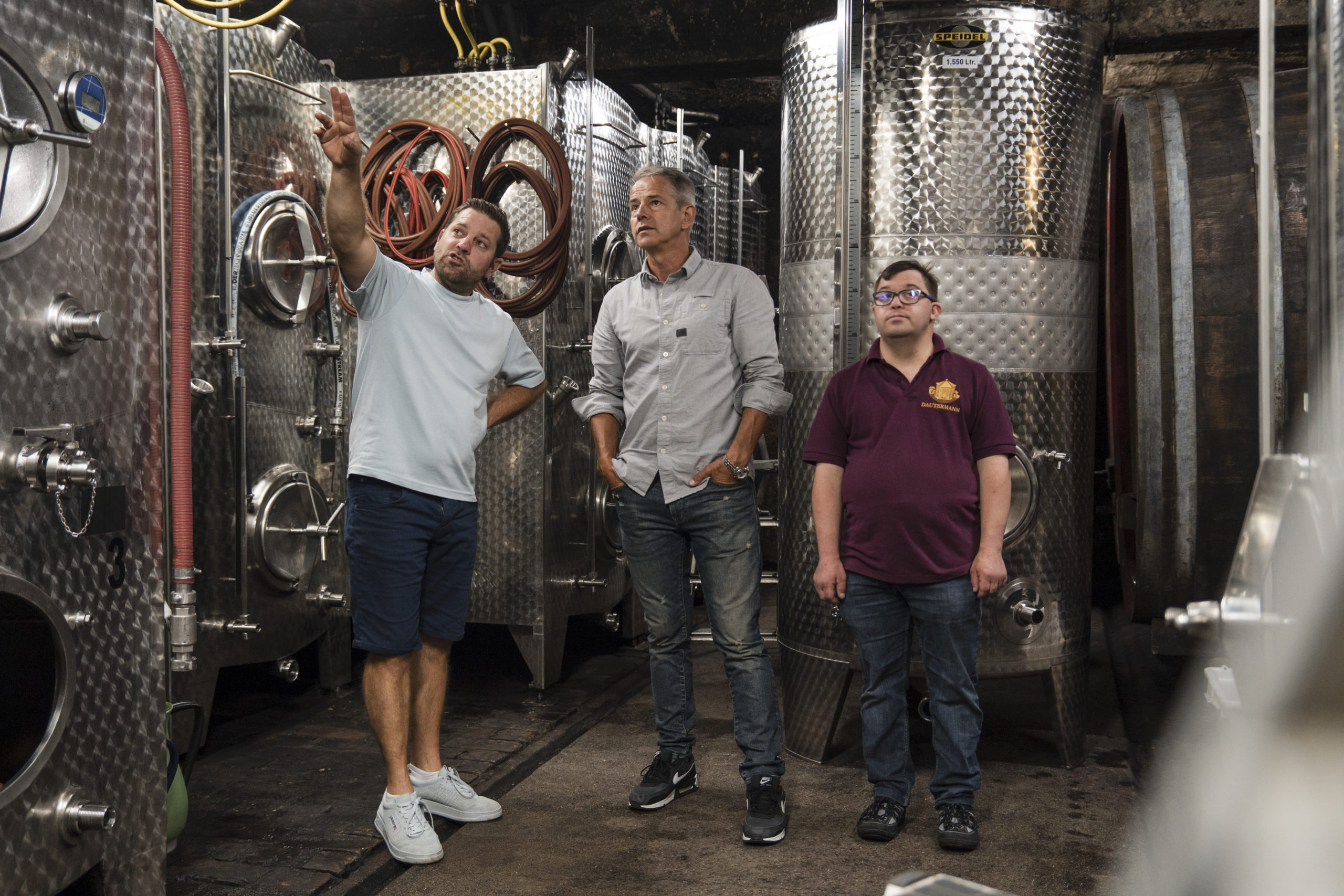
At K. & K. Dautermann in Ingelheim, the connection between city and countryside takes a quieter, more social form. The estate integrates inclusive projects into its daily operations. It works closely with people with disabilities, making social responsibility a lived reality, not just a marketing message.
This approach resonates strongly with urban audiences, where inclusion, sustainability, and ethical production are becoming central to consumption choices. What makes it compelling is its natural integration into rural life, where work, community, and long-term relationships still define everyday routines.
Wine remains the core activity, but it becomes part of a broader narrative of care, responsibility, and mutual respect. Urban visitors recognize familiar values, while rural authenticity provides credibility and depth. Communication is key here. The winery’s language is open and unpretentious. It invites dialogue without moral pressure. This creates trust across cultural boundaries.
This is a clear example of how urban values can enrich rural wine culture without overwhelming it. The city provides the questions, and the countryside offers grounded answers.
Hospitality as Translation: Weingut Meyerhof
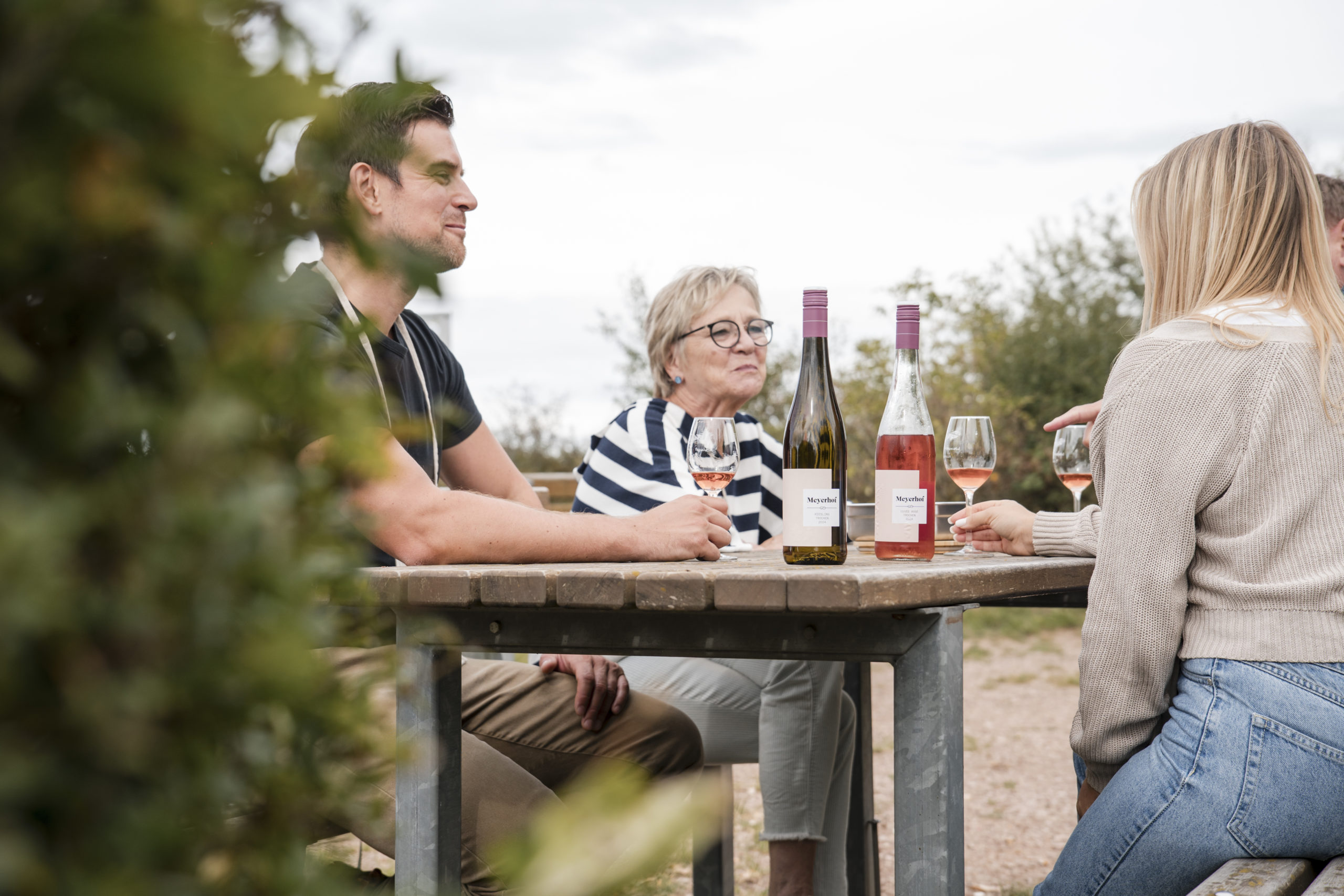
In Flonheim, a village defined by gentle hills and agricultural traditions, Weingut Meyerhof demonstrates how hospitality has become a bridge between urban expectations and rural realities. The estate has heavily invested in guest experiences, offering modern accommodations, clear structures, and professional service that align with contemporary travel habits.
Urban visitors come with certain expectations. They are shaped by hotels, curated experiences, and flexible lifestyles. They expect wine tourism to meet these standards without sacrificing authenticity. Meyerhof responds by creating spaces that feel comfortable and thoughtful. The vineyard remains at the center of attention, ensuring that guests remain connected to the land.
Wine tastings at Meyerhof are informative yet relaxed. They encourage curiosity over expertise, with conversations often extending beyond wine into food, landscape, and regional culture. This approach transforms a rural stay into a meaningful pause from city life. It is not an escape into staged simplicity but a genuine experience.
Here, hospitality becomes a form of translation. It allows the language of the countryside to be understood without dilution while respecting the rhythms and needs of an urban audience.
Beyond the Old Divide
The old divide between city and countryside no longer holds. In regions like Rheinhessen, the most compelling wines emerge from their interaction, where rural expertise meets urban curiosity. Vineyards remain places of patience, shaped by weather and soil, while cities offer platforms for exchange, interpretation, and renewal. Neither dominates, and both benefit.
Rheinhessen shows how this balance can work quietly, without spectacle. For international wine regions navigating similar dynamics, Rheinhessen offers a valuable lesson.
Further information:
Learn more about Mainz | Rheinhessen Great Wine Capital
(kh)