
Experiencing wine where it begins
Preparations are also underway at the Jürgen Bernhard winery in Undenheim. “What we need now is some rain so that the grapes can fill out a little more,” says winegrower Manuela Bernhard. Nevertheless, she is prepared for an early start to the harvest. After all, vineyard work has been part of Bernhard’s annual routine for more than 25 years. At the Bernhard winery, however, it is not only the professionals who can lend a hand during the grape harvest. Guests also have the opportunity to experience first-hand how grapes eventually become wine. As part of the hands-on grape harvest experience, participants can get involved themselves and learn about the different stages of harvesting. The idea of involving customers more closely in viticulture dates back to 2002. At the time, Manuela Bernhard and her husband began by offering guided vineyard walks. Over the years, these first activities developed into today’s participatory vintage experience.
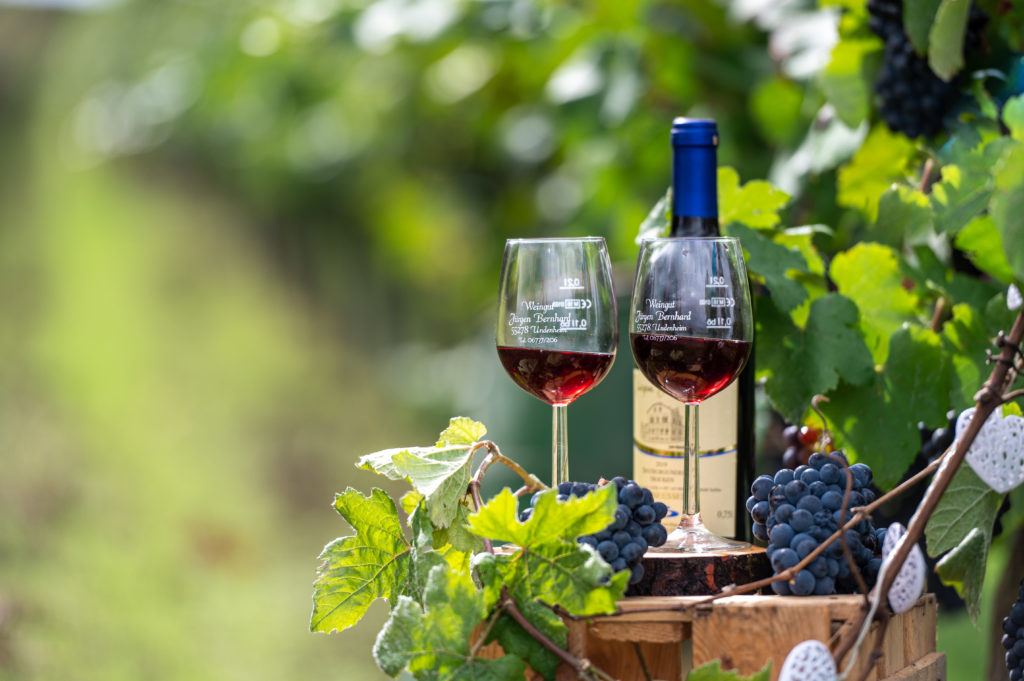 A special day for wine lovers
Bernhard is delighted with the positive response to the programme. Last year, the family received around 50 registrations. However, she deliberately limits each event to a maximum of 25 participants. After all, it is important to her to have enough time for every individual guest. A typical harvest day begins at 8:30 a.m. in the vineyard. Guests help with picking the grapes while gaining an insight into the daily work of winegrowers. Food and refreshments are also provided: the group enjoys lunch together, followed by coffee and cake in the afternoon. Afterwards, the experience continues in the cellar, where a short guided tour shows guests what happens to the freshly harvested grapes. A tasting of wine directly from the barrel is also included, along with explanations of the individual stages of cellar work. Those who stay until the evening can round off the day with a three-course dinner accompanied by selected wines.
More than a harvest: Creating personal connections
“We receive a lot of praise for our interactive grape harvest every year. People love coming back to our winery. It’s the family atmosphere that makes the difference,” says Manuela Bernhard. For the winegrower, experiences like this are far more than just a tourism product. They reflect a mentality that, for her, is characteristic of Rheinhessen: open, sociable and based on genuine personal connection. This closeness to the region and its wine is precisely what she wants to convey to her guests. “Our hands-on grape harvest is a fantastic fitness day with a real “wow“ effect.” Participants experience directly how the work carried out in the vineyard ultimately becomes a finished product, while gaining a comprehensive insight into the world of wine.
Bernhard is also optimistic about the future of wine tourism in Rheinhessen. She expects that many people will continue to visit the region and seek active experiences. She has noticed a particularly growing interest among younger generations in activities that allow them to participate themselves, even though this age group tends to consume less alcohol overall. In general, Bernhard believes Rheinhessen is already well positioned in terms of wine tourism. “Wine professionals in Rheinhessen are certainly hard-working,” she says. The region benefits, for example, from well-signposted hiking trails, while the tourist information office in her local municipality also does a great deal of promotional work. “There’s really nothing to complain about.” Participation in the region’s many wine festivals is also strong. In particular, younger people working in the wine sector are becoming increasingly involved and helping to keep Rheinhessen vibrant.
How a Wine Bar Owner Gets His Guests to Roll Up Their Sleeves
Mainz wine bar owner Axel Klug also wants to make the grape harvest accessible to his guests through creating a lively experience. Klug took over the “Beichtstuhl” wine tavern and cultural venue in November of 2025. The establishment has a long tradition of wine hospitality, dating back to 1910, when it first opened its doors. With the “Beichtstuhl”, the former economic development officer and city manager in Wiesbaden aims to create not only a place to enjoy wine, but also a venue for cultural events.
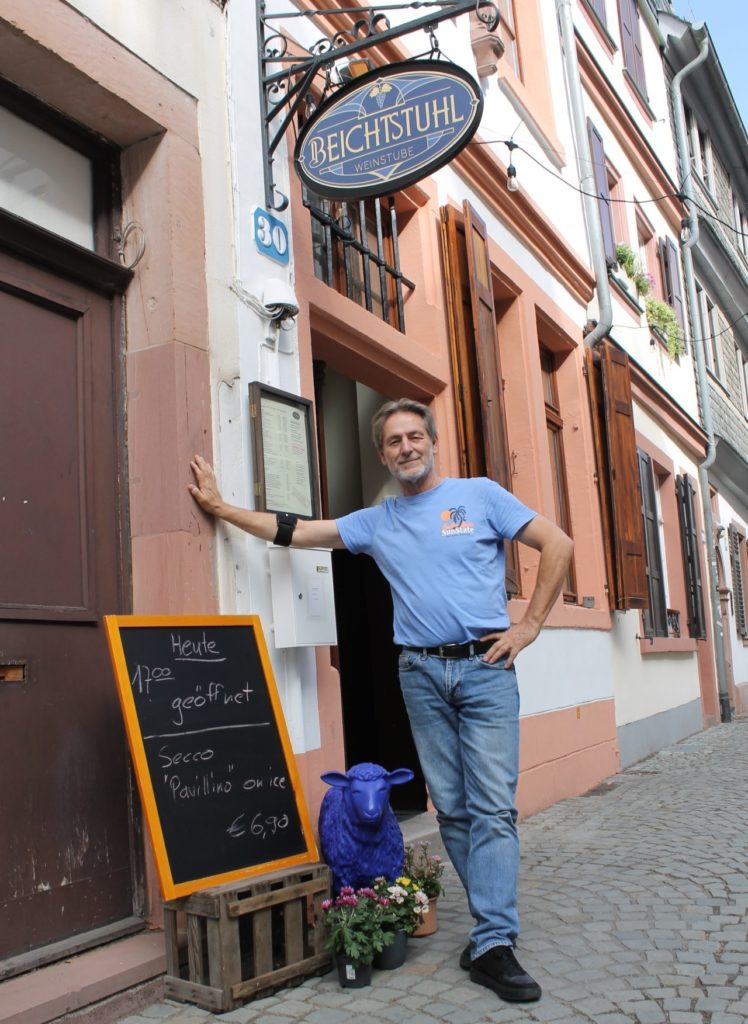 Together with winemaker Kristian Dautermann from Ingelheim, Axel Klug offers guests the opportunity to spend a morning helping with the harvest themselves. “Up to twelve people can take part. The meeting point is the winery at 7:45 a.m., after which the group heads into the vineyard together with me and the winery team”, the wine bar owner explains.The idea grew out of the desire to help people develop a stronger connection with the origins of the wine they drink. “There are many people who feel they would like to know more about the wine they are drinking,” Klug explains. At the same time, particularly those living in urban environments like Mainz often have little direct contact with viticulture. As a restaurateur, he therefore sees his role as creating a link between his guests and the wineries.
Bridging the gap between city life and the vineyard
Guests can actively lend a hand and authentically discover how the wine they may later enjoy in his bar is produced. This “doing it yourself” aspect is crucial, he says. At the same time, working together creates a sense of community within a group of people, which is why grape harvesting has also become a popular team-building activity for companies. According to Klug, Rheinhessen is ideally suited to participatory grape harvest experiences. The region lies between several larger cities, including Mainz, Wiesbaden and Darmstadt. Many people therefore live close to the vineyards but have no personal connection to the wine industry. Urban gastronomers can act as intermediaries, opening up the world of viticulture to their guests. “I act as a hinge between my guests and the world of wine,” Klug describes his role.
Connecting people, wineries and wine culture
He sees close cooperation between the hospitality sector and wine producers as an important prerequisite for participatory experiences of this kind. Gastronomers serving Rheinhessen wines should ideally also know the people and philosophies behind those wines. “Hosts need to be able to convey the atmosphere and character of the winery,” he says. First-hand experience in the vineyard helps them share these stories with guests later on in his wine bar. In this way, visitors from outside the region are encouraged to return to Rheinhessen. Looking ahead to the future of wine tourism in Rheinhessen, Klug sees particular potential in strengthening connections between the various stakeholders. “Dachmarke Rheinhessen”, the offical destination brand of the region, has already created a strong foundation for this. What is needed now, he says, are people who bring this cooperation to life and communicate the Rheinhessen way of life to the outside world. Axel Klug describes this way of life as open-minded and curious. “Ever since Roman times, many different peoples have passed through the region, settled here and mixed in all kinds of ways. This has shaped the people of Rheinhessen, who are generally outward-looking, open-minded and receptive to new ideas.” Klug sums up the goal of the grape harvesting experience accordingly: guests should spend a day learning something about wine “without feeling that they have to learn.” In this way, special connections are created between wineries, restaurants and wine lovers, Klug concludes.
Author: Marielen Notzon, Rheinhessen-Touristik GmbH
Photo credits: © Ulrike Ketter / © Marielen Notzon, Rheinhessen-Touristik GmbH