
The city’s new Districts framework was never designed only for first-time visitors. It was designed for everyone who already knows Porto is more than its postcard.
In 2024, Porto City Council did something quietly radical. Rather than introducing restrictions or deterrents to address the pressure on its most visited neighbourhoods – that they are doing, it drew a new map. Eight Districts – Quarteirões – each defined not by administrative boundaries, but by identity. By character. By the specific texture of daily life that makes one corner of the city feel entirely unlike another. This was much more than a traffic management exercise. It was a declaration: Porto is more than its postcard — and its residents have always known it. The city is simply ready to make that legible to the outside world.
The numbers that prompted the strategy were stark. Over 70% of Porto’s tourist activity — measured both in accommodation and in visitor spending — was concentrated in the Historic Centre and the Baixa. Two neighbourhoods. An extraordinary density of attention, and an equally extraordinary opportunity for everything beyond them. The instinct, in many cities, would have been to protect the centre: limit access, regulate flows, build barriers. Porto has done some of this too — but it chose a different and more ambitious path alongside it. At the same time of asking how to reduce pressure on what exists, it asked how to make more of the city worth returning to. Worth a slower visit. Worth staying longer in the same place and asking questions that, on the first time around, you didn’t yet know existed.
The renowned historian Hélder Pacheco gave that instinct its sharpest expression: “There is no such thing as too much tourism. There is too little Porto.” The problem was never the number of people who came. It was the narrowness of the invitation extended to them.
A City Redrawn from the Inside Out
The eight Districts were revealed. Each one already existed as a lived reality — with its own rhythm, its own community, its own accumulation of memory and daily life. What the strategy did was make them visible to the outside world.
It gave names and narratives to things that locals had always known, but that the standard tourist itinerary had rarely been invited to find. In that sense, the Districts map is a validation of the Porto that already exists — the one built, over decades, by and for those who live here anddesigned for those who stay.
This is the subtlest and most important part of what Porto has done. The design work happened in the act of framing: deciding that the eastern edge of Campanã, the Atlantic shore of Foz, the layered bohemia of the Bonfim, each deserved to be seen as a destination in its own right — not a detour from the real one. The result is also a gesture of territorial cohesion and a more equitable distribution of attention, of footfalls, of economic life across the city.
The Visitor Who Chooses, the Returner Who Deepens, the Resident Who Already Is
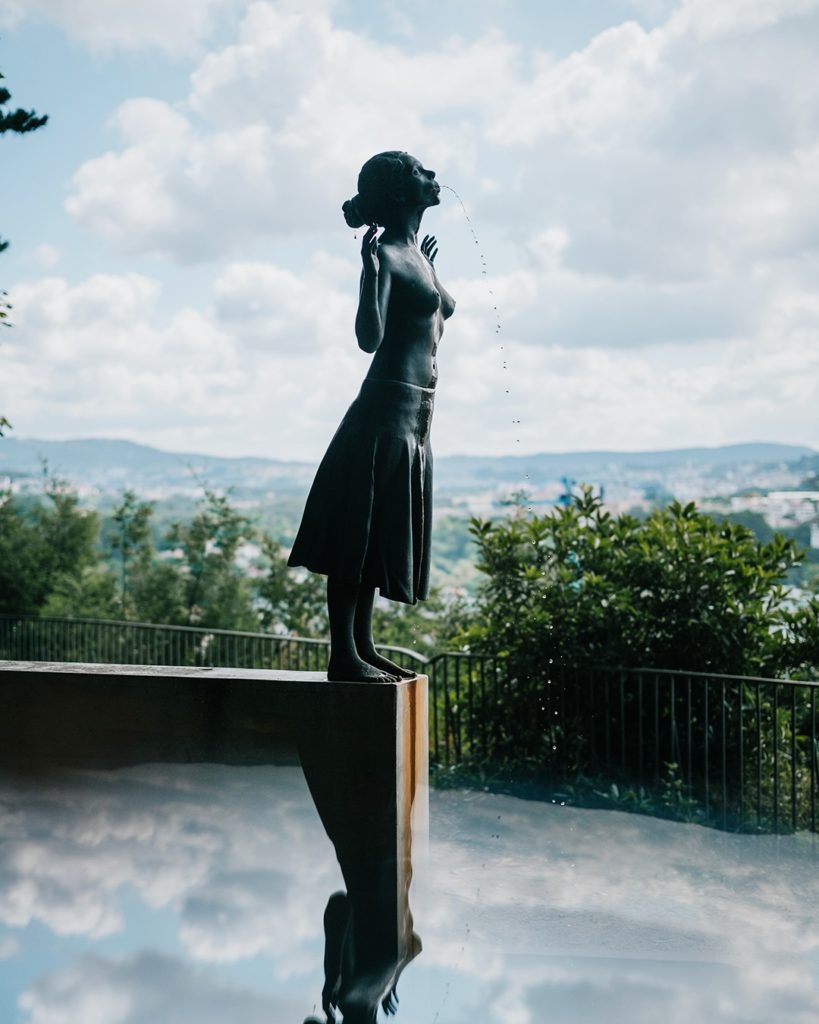 The result is a city that can be read in multiple ways, at multiple speeds. Some will move through all eight Districts. Most will settle into two or three. But the offer exists in full, and that fullness changes the nature of the invitation.
There is a hierarchy worth naming here. The first-time visitor perhaps chooses their Porto – picks a neighbourhood, follows a recommendation, begins to form a relationship with the city. The one who returns deepens it: comes back with less urgency and more attention, willing to linger in the same street and ask the questions the first visit might didn’t yet know how to pose. And the resident doesn’t choose at all — they simply inhabit. Their Porto was already composed long before any map was drawn.
What Porto has understood — and what makes this relevant beyond its own borders — is that designing a destination is creating the conditions for something new to emerge. Isasking “what do we want people to discover, feel, and carry with them?” It treats the city not as a product to be sold, but as an experience to be authored.
Creative design, at its best, is the act of looking at what is already there and giving it a new framing —revealing. The Districts framework does exactly this. By giving each district a distinct identity within a coherent larger narrative, Porto is more than just redistributing tourists is multiplying the city’s gravitational pull — creating new centres of meaning, inviting people to discover a version of Porto that already exists but had not yet been offered.
The Vintage Logic of a City
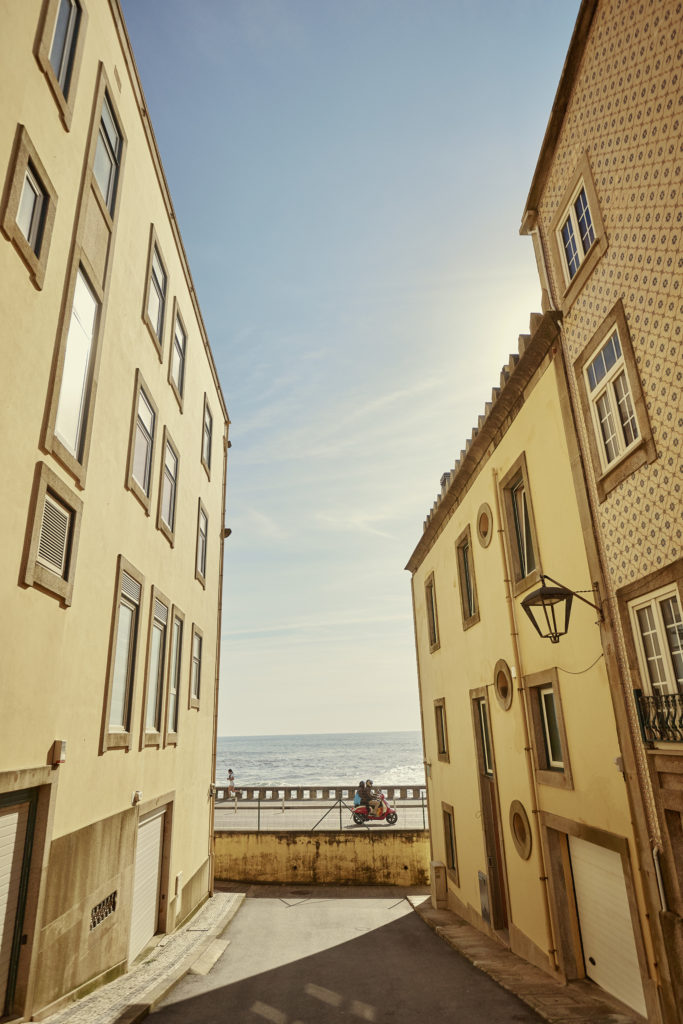 Port wine has always been defined by its capacity for transformation. Grapes grown in the steep schist terraces of the Douro descend the river, age in the lodges of Vila Nova de Gaia, and arrive at the glass as something the vine alone could never have produced. The journey is it is strategic.
Porto’s Districts follow the same logic. A city, like a great wine, is shaped by what it moves through — by time, by community, by the particular conditions of each place. The Historic Centre and the Bonfim, Campanhã and the Atlantic shore are are distinct — products of different soils, different stories, different relationships with the rest of the city.
To offer people only one neighbourhood is to offer them only one note. Porto’s new map is an invitation to taste the full range — and keep tasting it, one visit, two visits, three — to understand that the city, like its wine, only reveals itself completely to those who take the time to return.
Photo credits: VisitPorto
Learn more about Porto – Great Wine Capital