
Is wine tourism training more important to the industry than you might think?
Professionalising wine tourism not only creates a pool of talent to share a passion for place and product, but it raises the status of this increasingly important sector of the wine industry.
Not everyone in wine considers wine tourism a priority; some technical or management staff may see it as unimportant or even a nuisance, underestimating the effect it can have on the image as well the sales of the property. Professionalising the sector through training not only increases the calibre and effectiveness of staff, it raises the profile of these companies, ensuring support for wine tourism runs through the organisation.
Hospitality is a teachable skill
The wine maker might be passionate and technically brilliant, but communicating and sharing that passion is a different skill. Fortunately, it’s one that can be taught. Wine tourism actors need wine knowledge of course, including production, viticulture and tasting expertise, but that’s not enough. They need communication and storytelling skills to engage the audience, business skills to create the right tourism products and marketing and digital skills to sell them to their target market.
A talent pool
Now, more than ever, the wine industry needs to attract and retain talent. As the demand for and opportunities in wine tourism grow, it offers a career choice attractive to a broader audience, from people currently working in wine roles or from other industries.
Making wine attractive as a workplace is important; wine has a generation problem with both workers and consumers. In France, 56% of winegrowers are over the age of 55, while only 12% are under 40. (source Agreste).
As younger generations leave the industry, young consumers don’t see themselves reflected in here. It’s not surprising that wine is losing its appeal not only as a product but also a career path.
Professional fun
Wine tourism offers opportunities for fun and fulfilling roles that appeal to a younger work force. It covers hospitality, agriculture and luxury, it needs language and marketing skills and involves meeting and engaging with people from around the world – it’s an exciting and varied career option for all ages. Offering professional training and certification only reinforces its attractiveness.
Wine tourism professionals represent the image of the property and the product. The success of a visit depends upon them – a memorable experience, a warm welcome, the contact with the person translates into wine sales and repeat visits. Professionalising the sector sells wine tourism not only to consumers but also within the industry.
Bordeaux embraces training
Bordeaux offers a wealth of opportunities for wine tourism education, from ongoing professional training to Master’s degree level. These schools are already experts in teaching the wine business, from technical to commercial and tasting skills. Learning wine tourism is complimentary to and builds on these skills, but also brings an all-important outward-looking perspective to the industry.
For wine makers, ongoing professional training is an opportunity to revise basic marketing tenets, understanding client behaviours, journey and content strategy. It’s also an opportunity to learn how to share and pass on their passion.
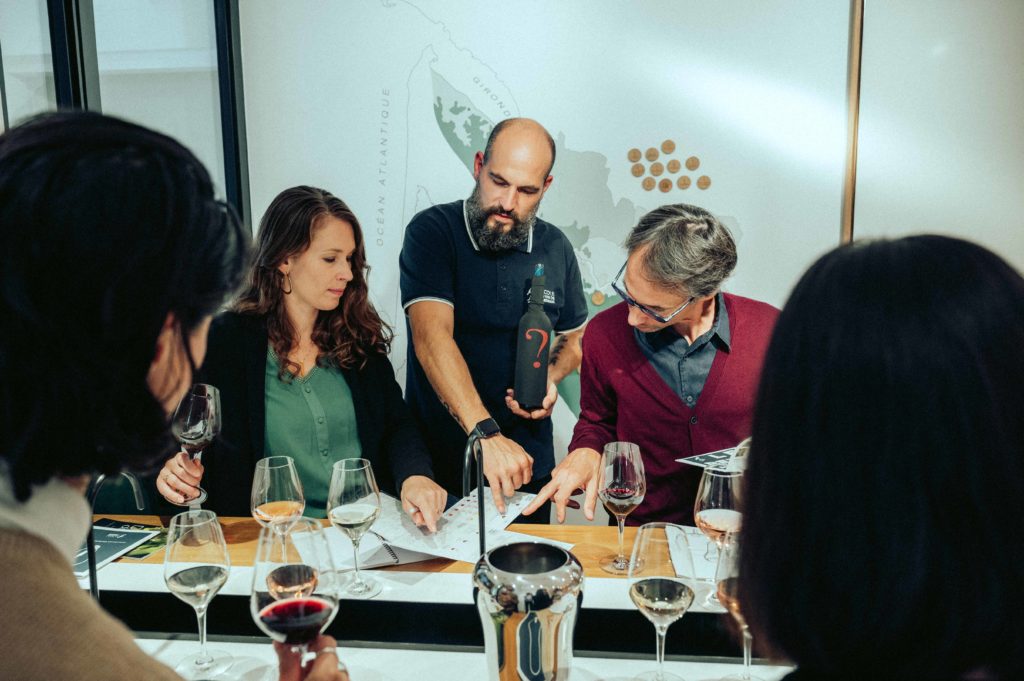
The Ecole du vin de Bordeaux is part of the Bordeaux Wine Council (CIVB), financed by and for wine makers. Their education programme trains amateurs to professionals, from educators, to sales teams and wine tourism professionals. Their short, very hands-on and locally focused ‘oenotourism’ programme is designed for wineries. It covers everything from defining a new wine tourism project to its practical application.
Their market analysis explores the creation of business plans based on the latest trends, practically guiding participants to create tourism products suited to their specific situation. It introduces them to tools and resources including key actors and potential partners, whether tourism offices, interprofessional organisations or travel agencies, etc. It concentrates on creating a client experience, through storytelling and the use of practical tools including digitalization to create a plan, including an investment schedule and a pricing policy.
Start them young.
For the future wine workforce, French agricultural lycées welcome pupils as early as 13-14 years old for a Diplôme National du Brevet (DNB) or 15-16 years old for a CAP agricole (CAPa) or a Bac Professionnel.
The leading Bordeaux agricultural colleges own and run vineyards where students learn viticultural and wine making skills first-hand. They are now offering wine tourism training and certified qualifications.
- The Agro campus: Four lycées form the National Centre for Viticultural Education with an emphasis on sustainable viticulture, development and protection of the natural environment. Over 1,000 full time students, 750 apprentices and 1,500 adults in further education attend the schools, which between them operate a 20 million euro budget.
- Golden Opportunity: In Sauternes, classified growth Chateau La Tour Blanche is home to an agricultural vocational high school.
It’s a prestigious site for a state-funded school offering free undergraduate and graduate training. This is thanks to Daniel Iffla who, in 1911, left the property to the French State on condition it would become a free wine school.
This year, they have introduced an apprentice contract for students creating a rural tourism project. This is not a cookie cutter training; skills include analysing and understanding the unique cultural and heritage resources of each project, including everything from the natural and cultural and heritage environment, to animation, accommodation and catering.
- On the right bank, Château Réal Caillou in Montagne Saint Emilion and in Lalande de Pomerol, belong to the Montagne Saint Emilion Agricultural college. They now welcome 300 residential students, offering five different Baccalauréat and Brevet programmes covering technical viticulture, wine making, sales and marketing and wine tourism.
- Chateau Dillon in Haut-Médoc is a Cru Bourgeois, a huge 300 ha property of which 130 ha are under vine. It is part of the Blanquefort Agricultural college, a campus that’s hard to miss as you leave Bordeaux and head north up the Médoc peninsula on ‘La Route des Châteaux’. They welcome 500 students every year and work closely with the neighbouring Hotel school in Talence and the Ecole du vin de Bordeaux mentioned above.
State funded agricultural schools have a legal obligation to educate but also to research, experiment and encourage international cooperation whilst engaging with the local community and helping social and professional insertion – quite a programme. These vineyard-school combinations are centres of education and research with the advantage for the chateau of access to the latest technology in field and cellar, and for students of exposure to a commercially run vineyard, seeing day-to-day operations and getting hands-on experience.
- Wine University
The ISVV (The Science Institute of Vine and Wine) offers university degrees in wine tourism (Bachelor’s Degree in Wine Tourism). Graduates go on to develop to wine tourism activities in properties in Bordeaux and across the world. As elsewhere, there is so much more to the programme than simply teaching students how to receive guests.
Their three-day course ‘Heritage and Landscapes in Support of Wine Tourism’ uses wine tourism experiences to build on every unique viticultural and rural heritage. Practical workshops and case studies show how wine tourism adds value to the properties and the regions. The aim is to deepen the understanding of what makes up the vineyard from terroir, to landscape, to vine and the whole territory, learning how to interpret local, personal and regional specificities to attract different wine tourism profiles.
Sustainability – is a key message schools are addressing, important in technical training but also at the forefront of visitors’ concerns. The ISVV is perfectly placed to explore how to build a wine tourism offer integrating biodiversity, agroecology and the importance of environmental certifications at once evolving and promoting the viticultural practises of the estate.
Sustainable development applies to wine tourism projects too. They explore an ecological approach to a winery journey, how to optimize tastings, food, working with local companies, accessibility and even the buildings.
From IRL to AI – In a time of AI, rapid and instant consumption and gratification, sharing culture and immersive personal experiences ‘IRL’ are increasingly in demand, but digital skills remain essential.
Students develop digital marketing skills, how to integrate new technology into the creation and/or the promotion of a wine tourism offer, an online marketing campaign, the creation and optimisation of a wine tourism website, social media, and influencer marketing, online promotion and emailing, online sales, measuring the optimising analytics and understanding of how AI is changing online marketing.
All this simultaneously raises the profile of the winery, the wine and the wine tourism offer.
- Kedge Wine School, founded in 2011,is part of the Kedge Business school with campuses in Marseille, Paris and Bordeaux.
Their MSc, Master of Science Wine & Hospitality Management is a hands-on, immersive experience-led programme that includes a 6-month internship and business field trips where students visit prestigious vineyards in France and South Africa. It is perfectly placed, with time spent between Bordeaux, with its access to the vineyards, and Paris, with its dynamic culinary and hospitality culture. The programme is available full-time or part-time.
The managerial, commercial, and technical education is uniquely tailored to the wine and hospitality sectors, including economics, market dynamics, strategic marketing, distribution management, investment planning, financial analysis, and management. It includes the WSET® Level 3 Award in wines and sommelier skills, to understand wine and its pivotal role across hospitality.
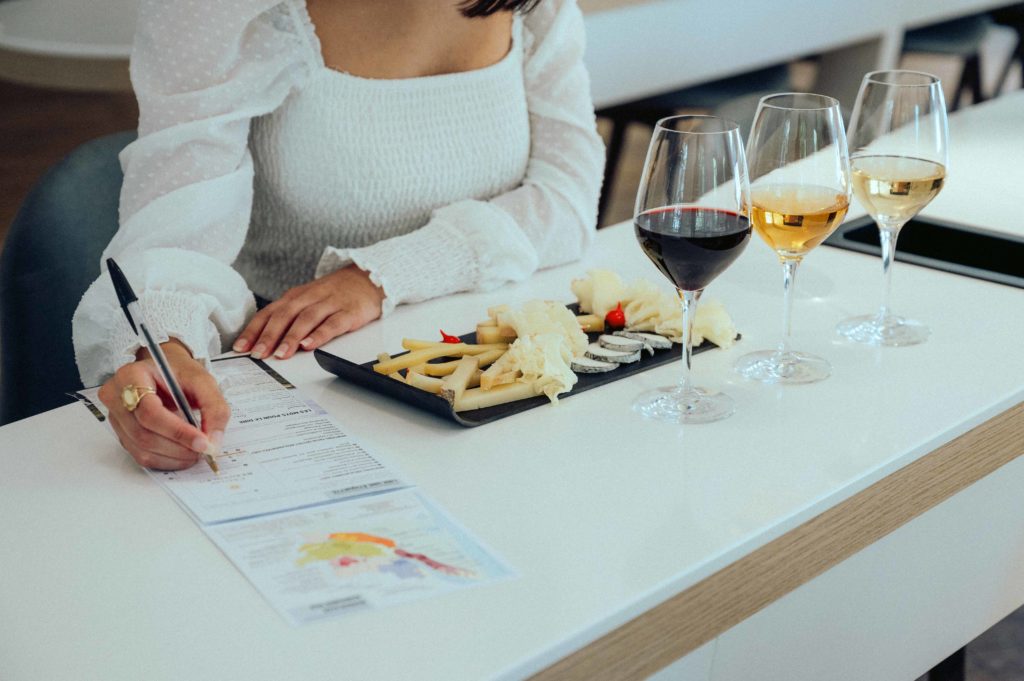
Research and innovation: Part of the qualification is a real business research project. This fits perfectly with the Kedge research centre; The Wine Tourism Institute dedicated to food, wine and hospitality research. The researchers are also teachers and students receive the benefit of all the latest R&D, bringing concrete examples and facts into classroom.
Wine Tourism education – a growth opportunity
In France, over 10 000 cellars are visited every year by 83,7 million foreigners (source Atout France). Wine tourism offers a huge development protentional for individual properties and rural wine regions.
Wine production might look romantic, but we know it is so much more than that. To reach its full potential, it’s an industry that needs to attract, train and keep excellent staff. Wine tourism offers this opportunity. Creating excellence in wine tourism above and beyond a warm welcome, is more than creating a skilled workforce, it’s building a collaborative, sustainable dynamic and viable rural economy and community.
Author : Wendy Narby for Great Wine Capitals
Photos credits : ©Louis_Vizet_EDV