
Worldwide sales of wine are dropping, but wine tourism is booming. With this in mind, we might ask, “Can wine tourism save the wine business?”
A great question! But before attempting to answer it by analyzing the latest economic data from the Global Wine Tourism Report from Geisenheim University and the Wine Tourism Monitor from the Rioja Regulatory Board, let’s delve into the evolution of wine tourism in the Rioja region.
Some Background – The Birth of the Wine Tourism Industry in Rioja
The increase in visitors to our region began with the trend of exploring parts of Spain other than traditional “sun and sand” destinations along Spain’s Mediterranean coastline. An added attraction is the Pilgrims’ Route to Santiago de Compostela that passes through Rioja. Pilgrims discovered the region’s natural beauty, its food and wine and spread the word.
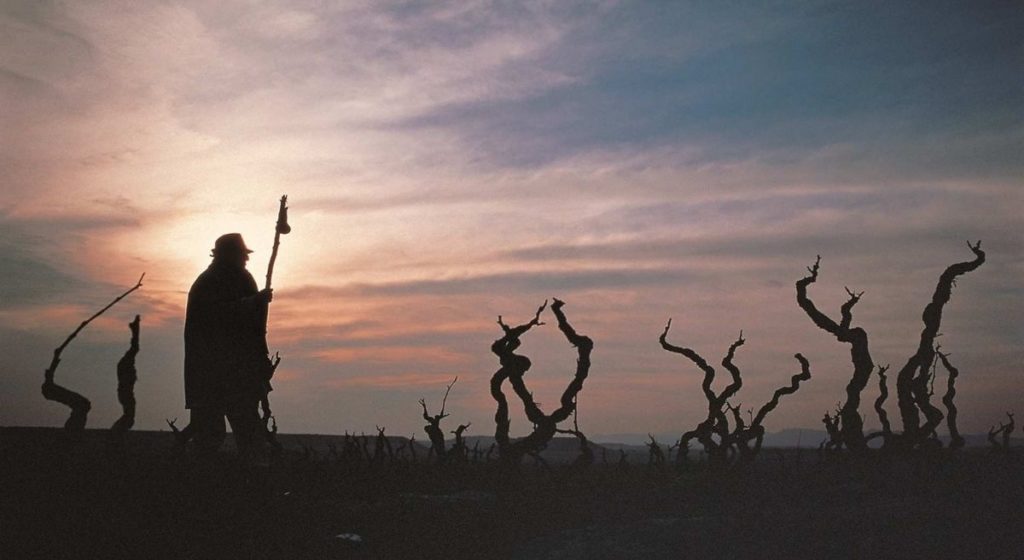
A pilgrim at dawn (Photo: La Rioja Turismo)
Although R. López de Heredia says that their visitors’ book shows tourists visiting the winery at the end of the 19th century, winery tourism only really showed a growth spurt at the end of the 20th century with the opening of the Dinastía Vivanco Museum of Wine Culture as well as the creation of several avant-garde wineries and buildings designed by world-famous architects. Among these are the Marqués de Riscal Hotel (Frank Gehry), Bodegas Ysios (Santiago Calatrava), Bodegas Campo Viejo (Ignacio Quemada), Bodegas Baigorri (Iñaki Aspiazu), Viña Real (Philippe Mazières), and the tasting room at R. López de Heredia Viña Tondonia (Zaha Hadid).
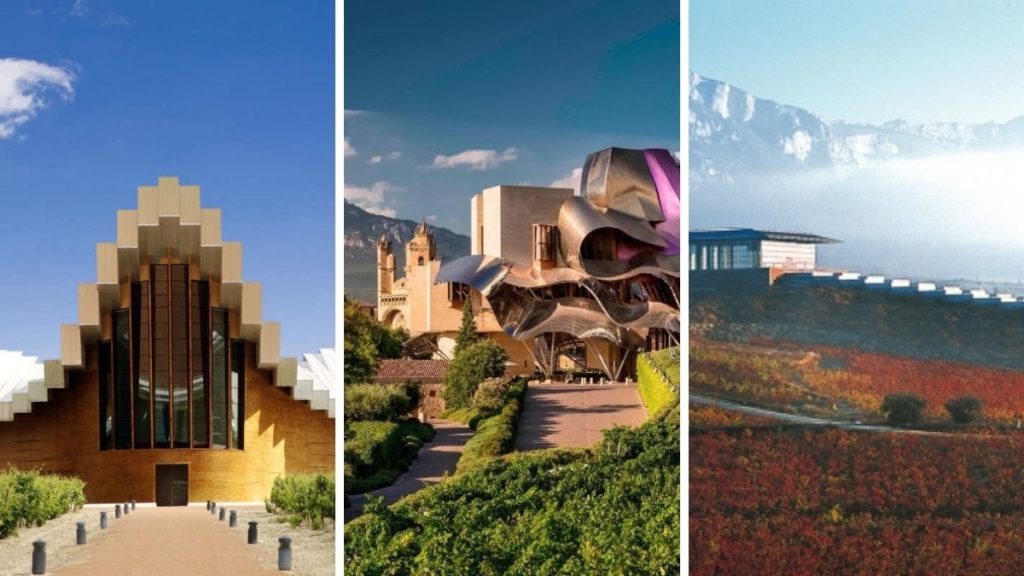
Photo credits: Bodegas Ysios, Marqués de Riscal, Baigorri
The arrival of internet and more recently social media have made it easier for wineries to promote their products and give the public a visual image of their facilities, providing an incentive to purchase and in some cases, to visit.
Other important drivers of visitors to Rioja have been wine journalists and magazines, whose articles about the food and wines of our region as well as positive reviews of individual wines have given a boost to sales and an interest in visiting our region.
Globally, wine tourism is an important driver of revenue for the wine industry. According to the Global Wine Industry Report published by the University of Geisenheim, 25% of total winery revenue comes from tourism.
The study dives deep into what motivates wine tourists:
“What Visitors Want: Authenticity, Sustainability, and Personalisation
Visitor expectations are shifting toward deeper and more meaningful experiences. The report identifies clear preferences for:
- Authentic, local experiences
- Personalised offerings
- Gastronomy-focused activities
- Sustainable practices
- Nature-based experiences
These trends reflect a desire for immersive encounters that connect visitors emotionally with the people and stories behind the winery. Social media increasingly influences travel decisions, encouraging wineries to enhance digital communication and storytelling.”
The most recent Wine Tourism Monitor published by the Rioja Regulatory Board with data through 2024 confirms that wine tourism experiences in the Rioja DOCa closely mirror these global trends.
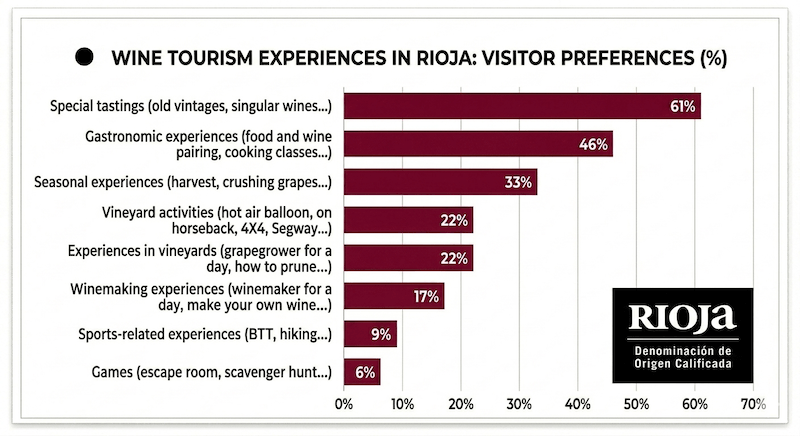
Based on the Wine Tourism Monitor created by the Rioja DOCa Regulatory Board.
Economic Aspects of the Wine Tourism Industry in Rioja
With over 200 wineries open to the 914.000 tourists who visited Rioja wineries in 2024 (the latest year for which figures are available), there is fierce competition to attract visitors. The old formula of “visit the winery and go to the gift shop” is no longer valid. Visitors are looking for more personalized experiences and wineries are becoming increasingly creative.
According to the Rioja Wine Tourism Monitor, over 80% of visitors come to our region on their own, with the rest arriving via intermediaries (DMCs or Destination Marketing Companies). They are attracted by innovative offers from wineries, among which are the following:
- Explore the aromas of Rioja wine (Museo Vivanco, Bodegas Ramón Bilbao)
- Blend your own wine (be a winemaker for a day) Bodegas Bohedal)
- A wine and chocolate tasting (Palacios Vinos de Finca)
- Learning to drive a Segway on a tour of a vineyard (Bodegas Muga)
- Participate in foot-trampling of grapes as in the past (Bodegas Lecea)
- Wine tasting under the stars with an introduction to astronomy (Bodegas Valdelana)
- Visit historic underground caves where wine was made and aged until the 20th century (Bodegas Lecea)
- Grape grower for a day (Riojatrek, a DMC)
Marina Grijalba, the dynamic director of Riojatrek says that her company will organize practically any activity requested by her customers. If no winery already has the activity in its arsenal, Riojatrek will organize it!

The Valdelana family during an Stellar Wine Marriage.
Premiumization
The WT Monitor reveals an increase in the price of visits:
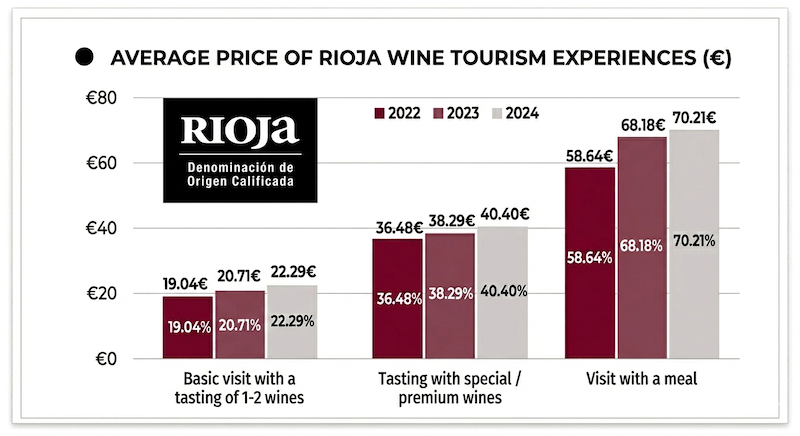
Based on the Wine Tourism Monitor created by the Rioja DOCa Regulatory Board.
Long-term commitment to wine tourism
The Monitor also confirms that Rioja wineries have made long- term investments in wine tourism:
- 25% of the wineries have been open to tourists for more than 20 years.
- 15,6% between 16 and 20 years.
- 14,6% between 11 and 15 years.
- 27,1% between 6 and 10 years.
- 15,6% for five years or less.
Profitability
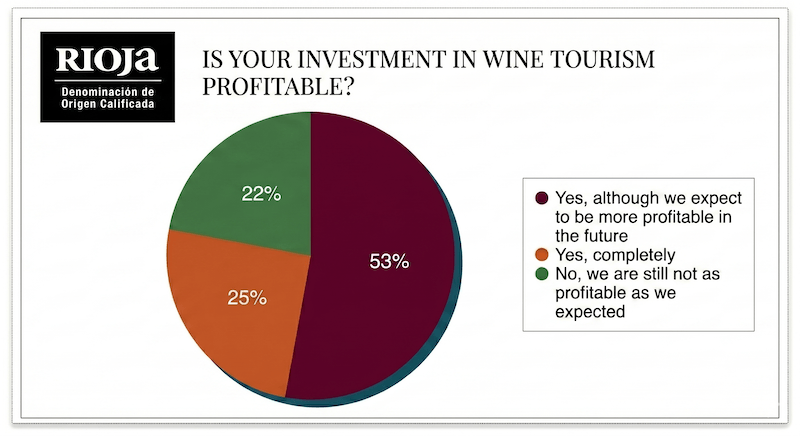
Based on the Wine Tourism Monitor created by the Rioja DOCa Regulatory Board
The Monitor provides an estimate of the economic impact of wine tourism in Rioja wineries (data from 2024):
- Revenue from visits and sales in shops: 45,4 million euros
- Revenue from other activities and services: 20,3 million euros
- Total: 65,7 million euros
The impact of wine tourism on other economic activity in our region (especially hotel stays and restaurants) has been estimated at 131,4 million euros in 2024.
So, it is safe to say that from the economic point of view, wine tourism has been beneficial to our region.
Back to our original question: Can wine tourism save the wine industry?
The decrease in wine sales is not mainly a question of supply, but rather of demand. Traditional consumer cohorts – Baby Boomers (born between 1946 and 1964) are drinking less or have stopped altogether mainly due to health concerns, while younger groups (Gen X, Millennials, and Gen Z) are not consuming at the same pace as their elders.
The supply question can be addressed by creating and marketing wines that appeal specifically to younger consumers’ tastes. To increase demand involves educating younger consumers about the aspects of wine that interest them: it’s a natural product with a long historical tradition, it’s the natural companion to food, sustainable grape growing and winemaking appeal to today’s consumer’s sensibility and wine is attractive for its ability to enhance conviviality. Wineries are the perfect places to communicate these benefits to consumers.
Increasing tourist visits to our region and to our wineries is a vital step. Historical data reveals that around 64% of wine tourists are from Spain, and the remaining 36% from abroad, for a total of just under one million total visitors in 2024.
Rioja’s membership in the Great Wine Capitals Global Network since 2002 has helped put our region, wines and wine tourism offer on a global stage.
An in-depth dive into possible solutions is beyond the scope of this article, but we could summarize them as follows:
- Involve more Rioja wineries in wine tourism. 200 wineries out of 700 have produced interesting results. Imagine the impact of 300 or 400 wineries open to wine tourists!
- Greater investment from our regional governments to advertise and market our region. Please note that the Rioja Regulatory Board is doing its part by investing 9 million euros yearly to promote Brand Rioja;
- A bigger push to attract overseas visitors, especially those with high per capita income such as the USA;
- Facilitate public transportation (trains and planes) from major Spanish cities such as Madrid and Barcelona to Rioja;
- Create more DMCs to help drive visits.
Our USPs (Unique Sales Propositions)
- Rioja is one of the world’s best-known wines. Consumers are curious to visit the region;
- Rioja itself is beautiful – a sea of vineyards framed by two mountain ranges, with rolling hills tumbling down to the Ebro river. This landscape is punctuated by small villages and towns whose church spires stand out as landmarks. The panorama invites visitors to explore it, whether by car, bus, on foot or by bicycle.
- Rioja is known as a foodie destination – from Michelin-starred restaurants to family-run eateries serving traditional local cuisine to a vibrant “tapas” culture, served in bars in every city, town and village in the region. Logroño’s calle Laurel is a world-famous area with over one hundred bars. Wine is a natural accompaniment to this food culture.
- Rioja wines are evolving to connect with modern consumer tastes (a wider range of white wines, wines with lower alcohol, sustainably farmed grapes…)
Conclusions
We now conclude this analysis with some conclusions:
1. The number of Rioja wineries open to tourists has increased steadily since the first wineries opened their doors at the end of the 20th century.
2. In 2024, 214 wineries received almost a million visitors, generating over 65 million euros in revenue.
3. The tourist packages offered by Rioja wineries closely mirror the consumer motivations set out in the Geisenheim study: authenticity, sustainability and personalization.
4. These tourist packages show an increasing level of creativity. Visitors are willing to pay for these premium visits.
5. For wine tourism to reach higher plateaus in terms of number of visitors, revenue and customer satisfaction, increased investments by regional governments are necessary to improve local and regional infrastructure and the image of the region.
___________
Text by Tom Perry, Inside Rioja
Featured photo: Bodegas Valdelana
Learn more about Bilbao-Rioja Great Wine Capitals