
A record-breaking number of tourists are visiting Rioja. This is great news for our hotels, restaurants, bars and wineries. An often-overlooked question, given that most visitors stay in Logroño, is how to travel to wineries, most of which are in towns and villages around the region. We have several suggestions.
Tourism is on the rise
Tourism in Rioja is breaking records. Figures recently released by Spain’s National Statistics Institute (INE) show that almost 900,000 tourists visited the province of La Rioja (the south bank of the Ebro River) from January through November 2025, an increase of 12% over 2024.
While no data for calendar year 2025 has been made available yet by Rioja Alavesa (the north bank of the Ebro) it is expected that the 2024 figure of 258,000 visitors will be surpassed.
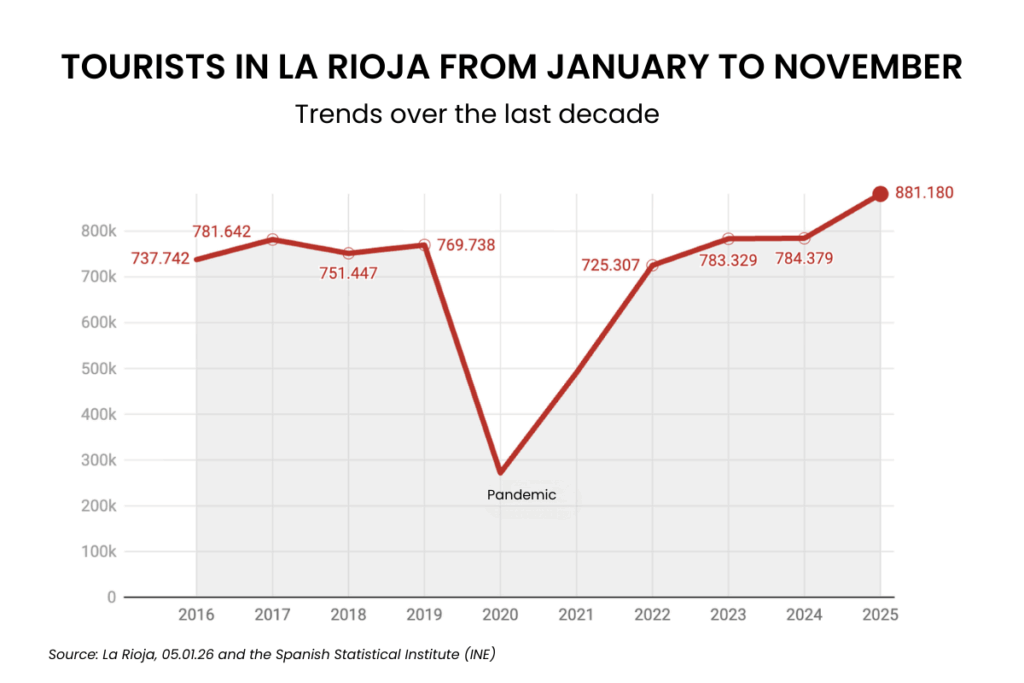
The Rioja Regulatory Board reports that almost 900,000 tourists visited Rioja wineries in 2024. Based on the above data from the province of La Rioja, total visitors to wineries in 2025 will likely surpass one million.

Haro Raiway Station Tasting in Haro, La Rioja
From lodging to winery – several options
The major challenge for wine tourists in every wine region is traveling from their accommodation to wineries. Below are several alternatives for getting from your hotel, tourist apartment, or campground to Rioja wineries:
Specialized wine tour companies – go with the experts
If you prefer:
- Working with someone who knows the wineries and can make bookings for you.
- Having a tour tailored to your specific interests (types of wineries, visits to vineyards, tastings of rare wines).
- Visiting cultural attractions (wine villages, museums, monasteries, churches) with guidance from a local expert.
- Tasting wines without having to worry about naming a designated driver and alcohol checks by the police.
- Advising you about local hotels, restaurants and shopping.
- Traveling either by yourself or joining a small group of like-minded tourists.
If this is the case, a specialized wine tour company is your best option.
Currently there are four in the Rioja region:
Contact: Ms. Marina Grijalba
Riojatrek was a 2025 regional Best Of Wine Tourism award winner for Wine Tourism Services from the Great Wine Capitals Global Network.
Contact: Ms. Amelia Pereira
Contact: Ms. Inma Bezunartea
Contact: Ms. Rebeca Pérez
Self-driving
If you’re an experienced wine tourist and want to plan your trip to Rioja on your own, you can always drive your own car. Here, we see cars with license plates from every country in Europe, so it’s a popular option. Roads are clearly signposted and are easy to navigate.
If you arrive to Rioja from outside Europe, you can rent a car from one of the international companies with offices in Logroño (Europcar, Enterprise, Alamo, and National).
Words to the Wise
However, if you drive yourself, please keep in mind:
- Rioja wineries require that you make an appointment, and in the high season (late spring, summer and fall), demand is high. You should plan well in advance. All of the wineries open to wine tourists have websites where you can book.
- Most boutique wineries (the ones with high scores from magazines and wine writers) are not open to visitors except for journalists, sommeliers and other luminaries.
- Be careful with tasting too much unless you have a designated driver in the car. If you are required to take a Breathalyzer test, the limit is .25 mg. per liter (in some cases, even one glass of wine will put you over the limit). The police often do unannounced spot checks. You don’t want to spoil your holiday by having to pay a fine and risk having your driver’s license suspended. Consequently, we strongly recommend not driving if you are tasting.
Hiring a private taxi – an often-overlooked option
There are several companies and individuals specializing in driving tourists to wineries for a whole or a half day. A suggestion: your hotel can recommend tourist taxi companies that they are familiar with. My wife and I asked our hotel in Margaret River in Australia for a taxi recommendation, and it worked out perfectly.
Among the companies based in Logroño are:
In Laguardia:
You might consider biking
The Rioja region is hilly, so we recommend that you should be an experienced biker and are in good physical condition. Biking lets you explore paths through vineyards and other places that are not easily accessible by car.
A tourist bus route
The Rioja Alavesa Wine Route operates a seasonal bus route to wineries in Rioja Alavesa. The Enobus leaves from Bilbao, Vitoria-Gasteiz, Labastida and Logroño and visits different wine villages and wineries every month. Enobus requires a minimum of 12 persons and children are not allowed.
The 2026 schedule has not been published yet, so please consult the Enobus website.
Regional bus services – not a good option
There are several bus routes connecting towns and villages in Rioja and Rioja Alavesa. However, these buses cater to shoppers and workers and usually leave early in the morning and return in the late afternoon. They do not stop at wineries.
No matter which of the above options you choose, Rioja welcomes you with open arms to enjoy the experiences that will guarantee an unforgettable visit.
___________
Text by Tom Perry, Inside Rioja.
Photos: The Train Station District Association in Haro, La Rioja
Learn more about Bilbao-Rioja Great Wine Capitals.