
In today’s travel landscape, destinations are no longer defined by sights alone—they are shaped by how they make visitors feel. This is particularly visible across the Rheinhessen region, where wine has never been only a product, but the starting point for immersive, multi-sensory experiences. Rheinhessen has embraced a holistic approach to tourism—blending design, gastronomy, and hospitality into a cohesive narrative that invites visitors to truly step into the region’s lifestyle.
Rather than focusing solely on tastings, the region tells its story through places—through architecture that frames the landscape, cuisine that reflects local identity, and hosts who turn a visit into a personal connection.
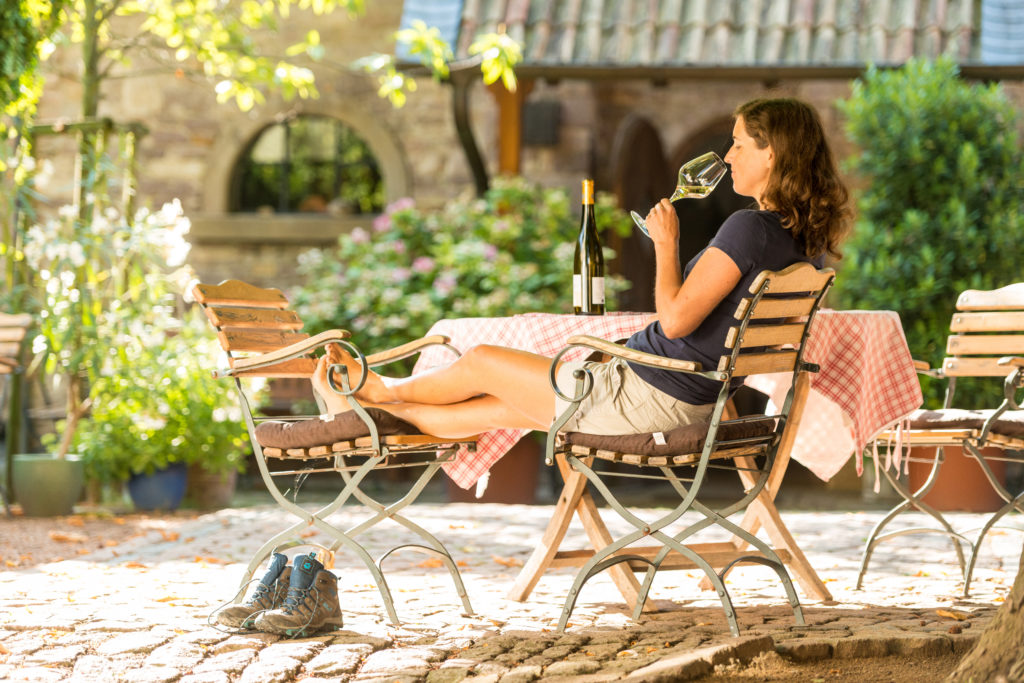
Guests enjoy wine on a terrace overlooking vineyards, combining contemporary architecture with a scenic landscape. The setting highlights wine tourism and outdoor leisure. ©Dominik Ketz
Innovation Rooted in Tradition: Weingut Dr. Koehler
At Weingut Dr. Koehler, tradition and innovation are not opposites, but partners. As a Best of Wine Tourism Awards 2026 winner, the estate exemplifies how a historic winery can evolve into a contemporary visitor destination without losing its roots.
Guests are invited into a carefully curated environment where modern hospitality concepts meet a deep respect for heritage. From thoughtfully designed tasting experiences to the integration of sustainable practices, every element is geared toward creating a sense of authenticity and relevance. The winery opens itself up not just as a place of production, but as a space of dialogue—between past and present, winemakers and visitors.
This approach transforms a visit into something more meaningful: an encounter with a living, evolving wine culture.
Where History Meets Flavor: Hundertguldenmühle
A short journey through the hills of Rheinhessen leads to the Hundertguldenmühle, where centuries-old architecture provides the backdrop for a deeply rooted culinary experience. Set within a historic mill, the restaurant bridges past and present with remarkable ease.
Here, regional cuisine is elevated without losing its authenticity. Seasonal ingredients, local wines, and a strong sense of place define every dish. The setting itself, including stone walls, wooden beams, and a warm, inviting atmosphere, creates a feeling of continuity.
The Hundertguldenmühle exemplifies how gastronomy can become a storytelling medium, allowing visitors to experience the region not only through taste, but through time.
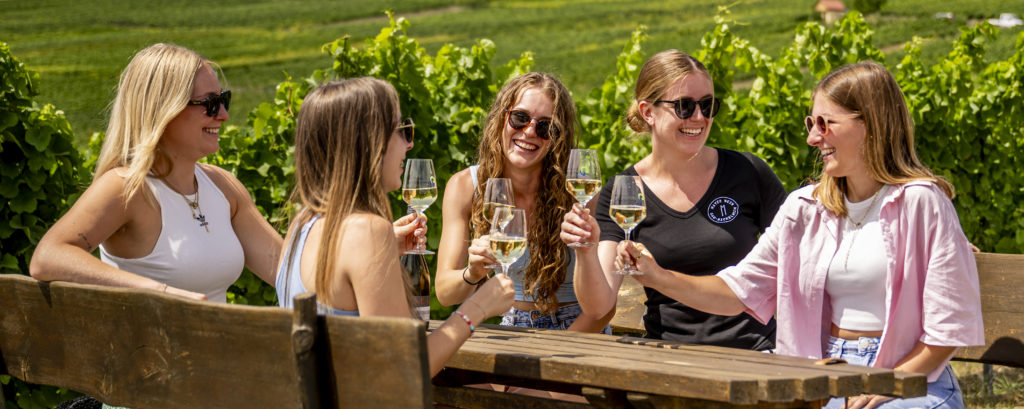
Visitors gather at a wine festival at Wiesberg, enjoying regional wines in a lively outdoor setting. The event highlights wine culture, social interaction, and tourism in the vineyard landscape. © BY SA Rheinhessenwein e.V./Torsten Silz
Living the Wine Experience: Weingut Meyerhof
If experiencing a destination means truly immersing oneself in it, then staying at Weingut Meyerhof is a good way to understand Rheinhessen. This family-run estate turns hospitality into an extension of its wine philosophy.
Guests don’t just visit—they become part of the rhythm of the winery. Surrounded by vineyards, mornings begin with open views across the landscape, while evenings are shaped by quiet moments and personal encounters. The accommodation reflects a thoughtful blend of comfort, sustainability, and understated design, creating a space that feels both intentional and welcoming.
It is this closeness—between host and guest, between place and experience—that defines the Meyerhof. Here, Rheinhessen is not presented; it is lived.
Designing Experiences That Stay
What makes Rheinhessen stand out is not a single landmark or attraction, but the way its experiences connect. From innovative wineries to historic culinary spaces and immersive stays, the region demonstrates how wine can serve as a foundation for a much broader narrative.
Each encounter adds a layer: understanding, taste, atmosphere, belonging. Together, they form a destination that feels cohesive without being staged—authentic, yet forward-thinking.
In Rheinhessen, designing a destination means designing moments. And it is precisely these moments—quiet, sensory, and deeply human—that stay with visitors long after they leave.
Author: Ellen Kneib