
An overview of the situation in 2026
Grape growing, like all other agricultural production, is unpredictable.
In recent years, global warming has caused earlier ripening of grapes, and the unusually warm weather in 2026 has accelerated this trend. Moreover, increased temperatures have caused challenges for winemakers because grapes are likely to reach high potential alcohol (sugar in the juice) with green tannins. Measures are being adopted to mitigate this situation, but they are outside the scope of this article.
The worldwide demand crisis is an important variable. Wineries are selling less and consequently have unsold inventory and a reduced need to purchase grapes.
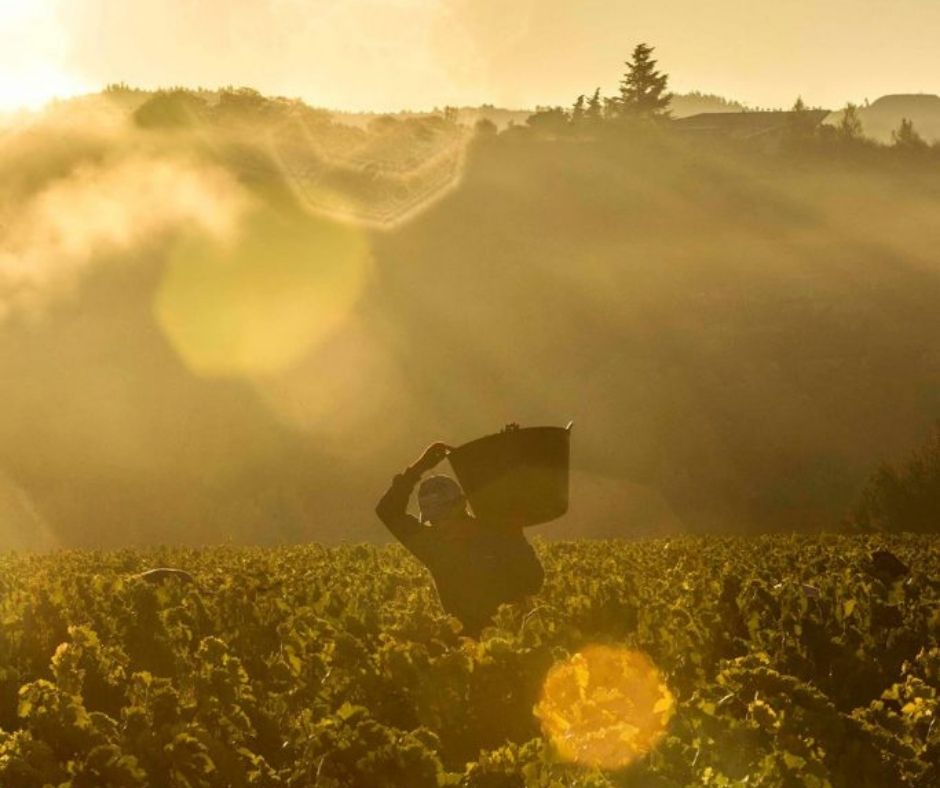
In Rioja, experts from the Rioja Regulatory Board and growers’ representatives predict a harvest similar in size or slightly smaller than the 2025 harvest. This is the result of extremely close observation of individual vineyards, including the use of drones, and artificial intelligence to predict production.
The Inventory to sales ratio: an important measurement used in Rioja
One of the traditional production goals in Rioja is for the grape and wine supply to be as closely matched as possible to sales. A measurement called the inventory/sales ratio is used. Sales can be reasonably predicted using a running 12-month total. Predicting production is another question. Historically, a ratio of just over three years of inventory in wineries to sales has been a reliable predictor of grape prices. High inventory pushes the ratio up and grape prices tend to be low. Conversely, low inventory causes the ratio to decrease, with the corresponding increase in grape prices.
At the end of the day, production is extremely difficult to predict due to the inherently fickle nature of the elements: drought, hail, floods, rain during the harvest, and in 2026, abnormally high temperature. The situation can change overnight.
Production measures adopted by the Rioja Regulatory Board
That said, the Board has approved several measures, including setting maximum yields of 90% (6500 kgs per hectare x 90% or 5850 kgs per hectare) for red grapes and 100% (9000 kgs/ha) for white grapes, with grape to wine transformation ratios of 69% and 70% respectively. Excess production must be distilled, and green harvests will be allowed in certain areas.
Despite these measures, the outcome of the harvest will be uncertain until November. As the great U.S. baseball player and manager Yogi Berra famously said, “It ain’t over till it’s over.”
___________
Text by Tom Perry, Inside Rioja
Photos: Regulatory Council of the Rioja Qualified Denomination of Origin
Learn more about Bilbao-Rioja Great Wine Capitals