
The Quality Designation of Origin Rioja lies in the middle Ebro River valley in northern Spain. Its extension is about 100 kilometers from east to west and 40 kms, from north to south. The valley’s borders are the Cantabrian mountain range to the north and the Demanda and Cameros ranges to the south.
The hills above both the Ebro and its seven tributaries that flow into it from the south contain numerous microclimates and soils. Along with Rioja’s diverse grape varieties and the skill of winemakers, these quality factors contribute to both the quality and variety of Rioja wines.
The three zones: Alta, Alavesa and Oriental
For a general overview of the three zones, please consult the following chapters in the official Rioja website:
Manuel Ruiz Hernández, a retired technician at the Haro Viticultural and Enological Research Laboratory and a widely consulted figure in the Rioja industry writes:
The dominant winds in La Rioja throughout the year come from the north and the west. The excellent harvests are preceded by these winds. Nonetheless, when the prevailing winds come from the east, the harvests are generally not excellent.
Curiously, grapevines came to us from the Mediterranean basin but great quality is due to the humid “nuance” of winds from the high pressure system from the Azores that flow over the Basque mountains during the summer.
Because of this, the Riojan climate year can be either continental or maritime. Winds from the east define continental climate and those from the north define maritime climate. In each case rainfall is the same, about 450 liters per square meter. But the distribution of rainfall is different throughout the year. When winds from the east are predominant, the rainfall distribution is 80 liters during the winter, 160 during the spring, 50 during the summer and 160 during the autumn..
When the prevailing winds are from the north, the distribution of rain is 110 liters during the summer, 120 during the spring, 90 during the summer and 130 during the autumn.
(Source: Haro Digital)
Climate types in the Rioja region
The following overview of climate and weather patterns in Rioja draws on the work of José Calvo, a local dentist and amateur meteorologist and the creator of Meteosojuela, a popular website dedicated to weather and climate in the region.
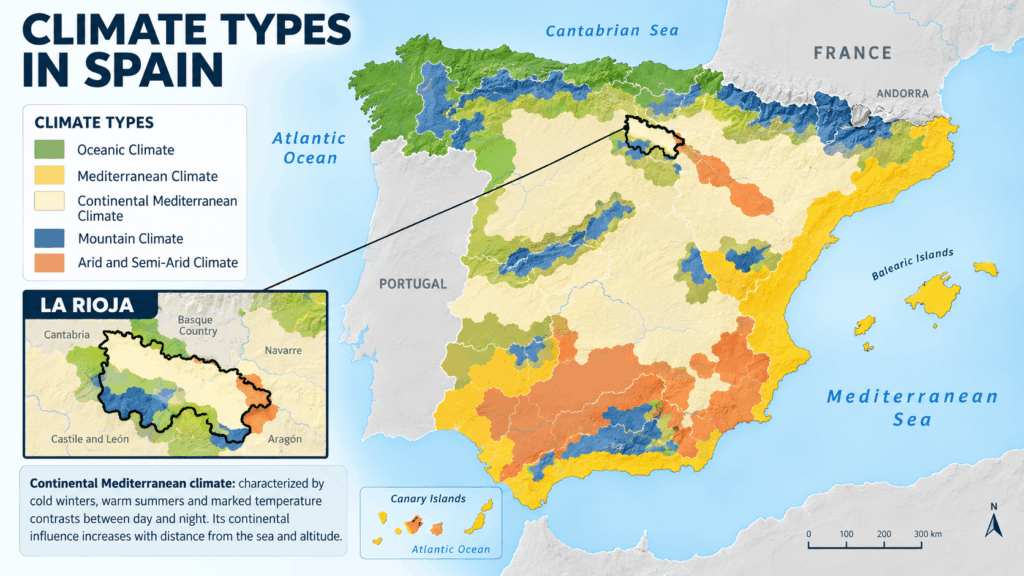
As defined in the following map, the general climate type in the Rioja region is Mediterranean with Continental Influences (Mediterráneo continentalizado) characterized by long cold winters, short, warm summers and wide temperature variation between days and nights.
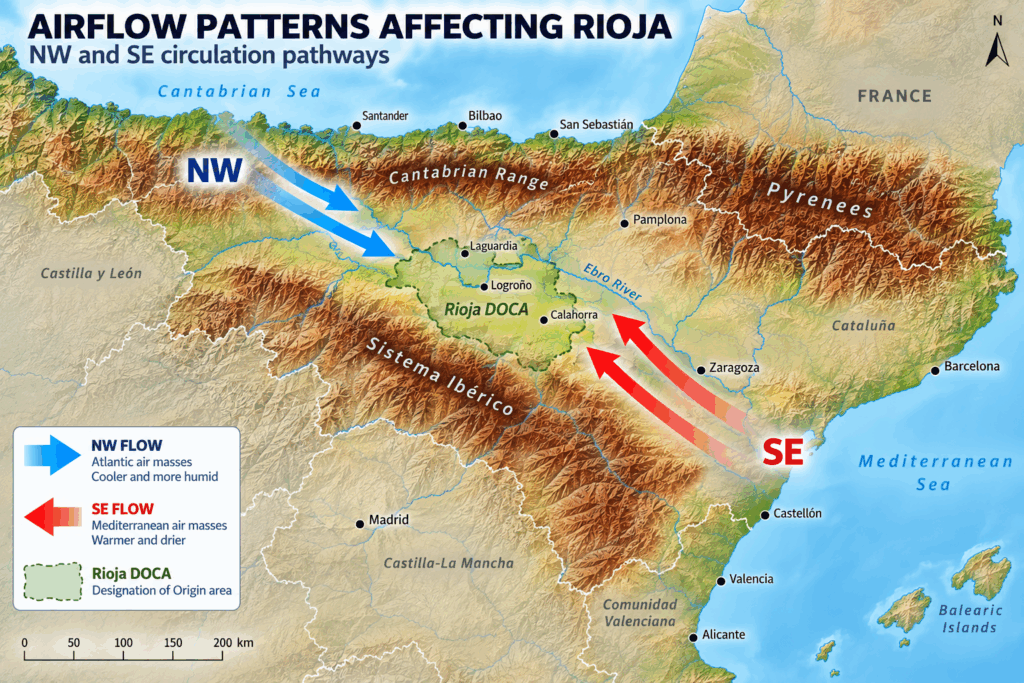
Air flows
Generally speaking, cold air flows down the valley from northwest to southeast and warm air flows up the valley from the Mediterranean.
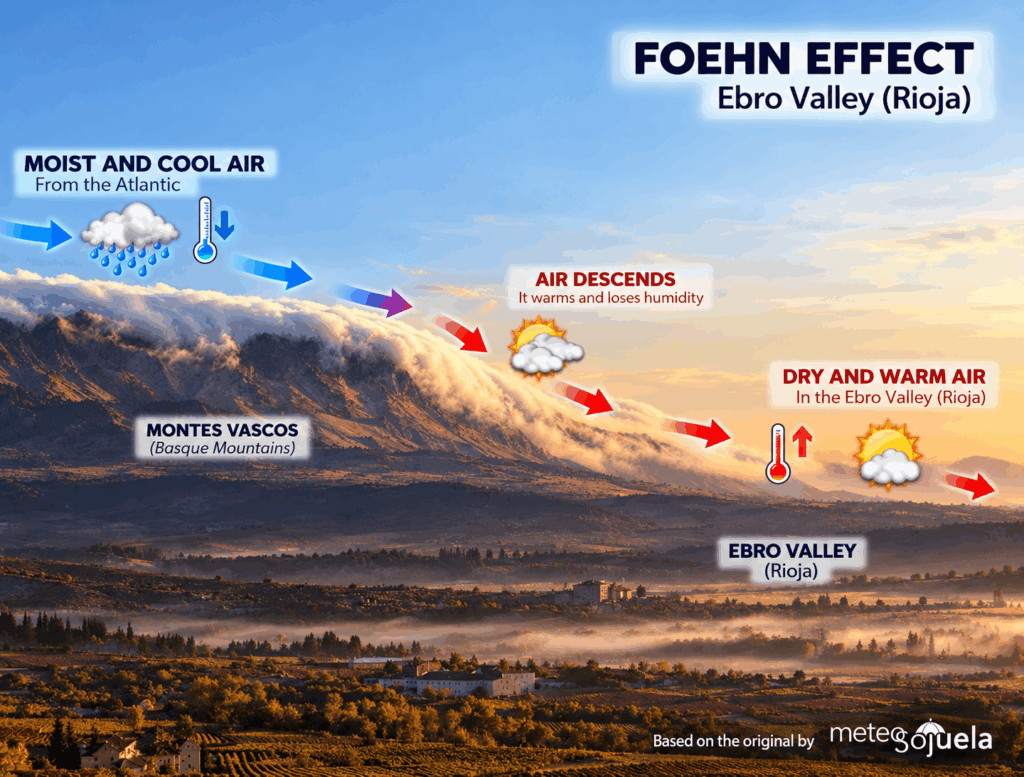
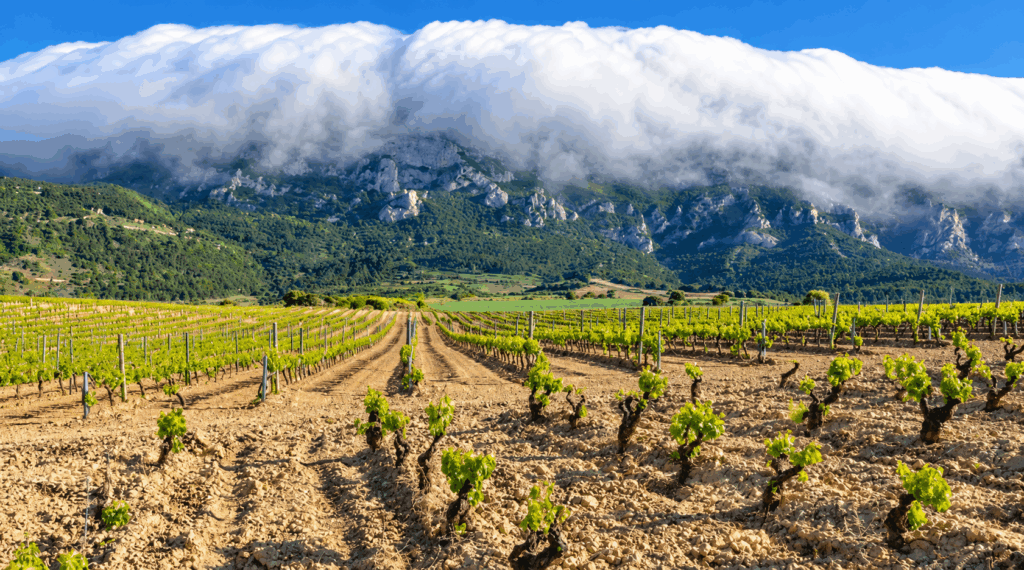
Vineyard in Rioja with the Foehn effect in the background (Shutterstock)
Rainfall
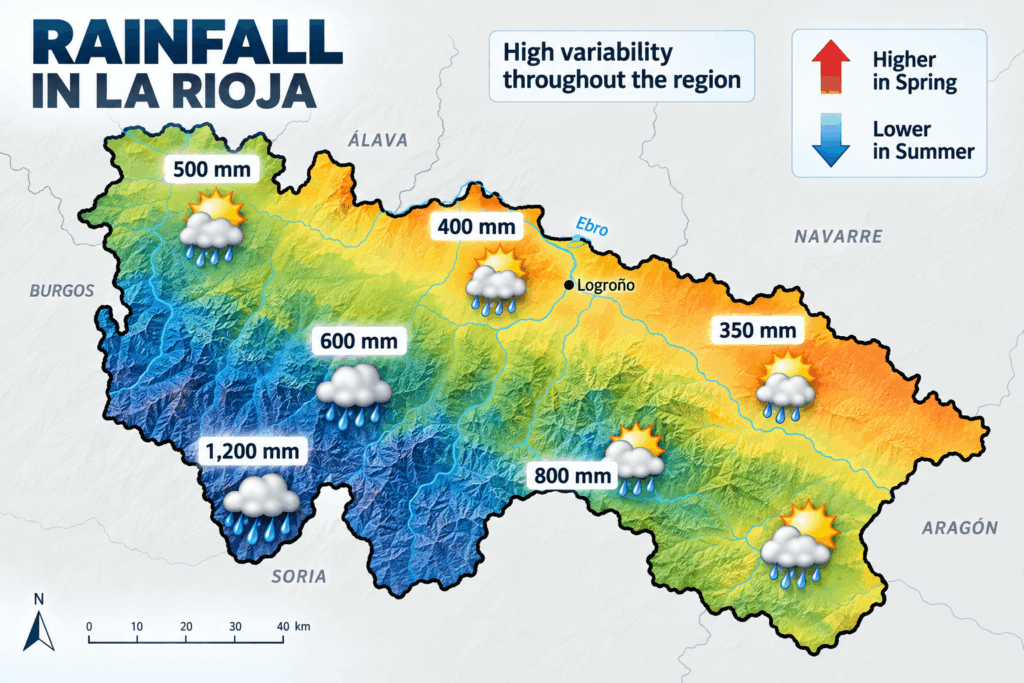
Average yearly rainfall is highest in the upper part of Rioja Alta and Alavesa (500mm), “mid” Rioja – the area around Logroño with 400mm and Rioja Oriental with 350 mm. As explained above, the distribution of rainfall is irregular and depends on the influence of prevailing winds.
Hours of sunlight
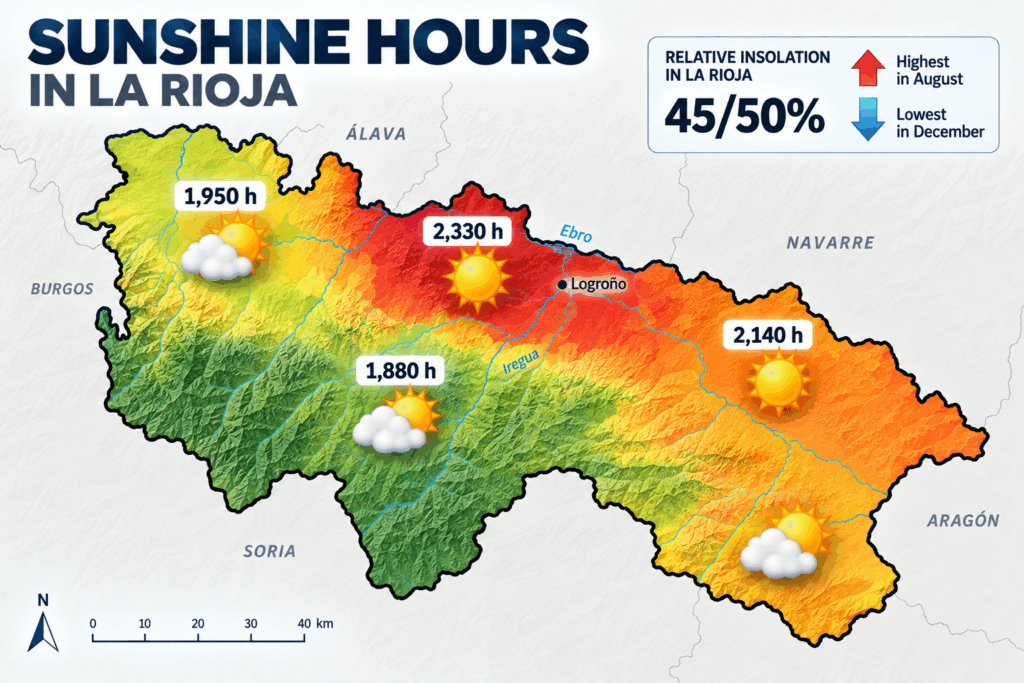
The upper part of Alta and Alavesa has the fewest yearly hours of sunlight (1950h). “Mid Rioja” (Alta and Alavesa) has significantly more (2330h) while the Oriental has 2140h per year.
The effects of climate change in the Rioja region
There is no doubt that warmer weather is impacting the growth cycle of grapes in the Rioja region and manifests itself in the three zones of Alta, Alavesa and Oriental.
Rioja wineries traditionally owned or leased vineyards, or bought grapes in Rioja Oriental. These grapes were used to increase the alcoholic strength of wines produced in the Alta and Alavesa that often only reached 9 or 10% ABV.
Today, warmer weather means that grapes from the Alta and Alavesa reach both phenolic ripeness and ideal potential alcohol for vinification with no need for blending with Oriental grapes. However, grapes from vineyards at lower altitude in the Oriental can often reach 15% or higher potential alcohol with unripe phenolics. There have been extensive plantings of vineyards on the slopes of Mt. Yerga, among the highest sites in the region. These vineyards produce grapes with lower potential alcohol and ripe tannins at harvest.
Fernando Martínez de Toda, the chair of the Viticulture Department at the University of La Rioja has stated that climate change has generally been beneficial to the Rioja region.
A very basic discussion of the efects of climate change in Rioja can be found in this link.
___________
Text by Tom Perry, Inside Rioja
The climate and weather information presented in this article is based on the work of José Calvo, creator of Meteosojuela. For this article, his original graphics have been adapted into English with the assistance of AI.
Featured image: Bodegas Ysios in Laguardia, Rioja Alavesa with the Foehn effect in the background.
Learn more about Bilbao-Rioja Great Wine Capitals