
Lynch-Bages: When a Château Becomes a Village
Château Lynch-Bages has always been one of Pauillac’s most beloved estates — approachable in spirit, formidable in quality. But the transformation of the village of Bages around it has turned a great winery into something rarer: a complete world.
Arriving at Bages today is not like arriving at a château. It is like arriving at a place that has decided, quietly and without announcement, that wine is not enough. The cobblestone lanes connect a wine shop — where bottles sit alongside jewellery, ceramics, home objects and clothing — to a bicycle repair workshop, to a butcher of exceptional quality, to the Café Lavinal with its green shutters and its blackboard menu written by hand. Everything within a short walk. Everything at the same level of care.
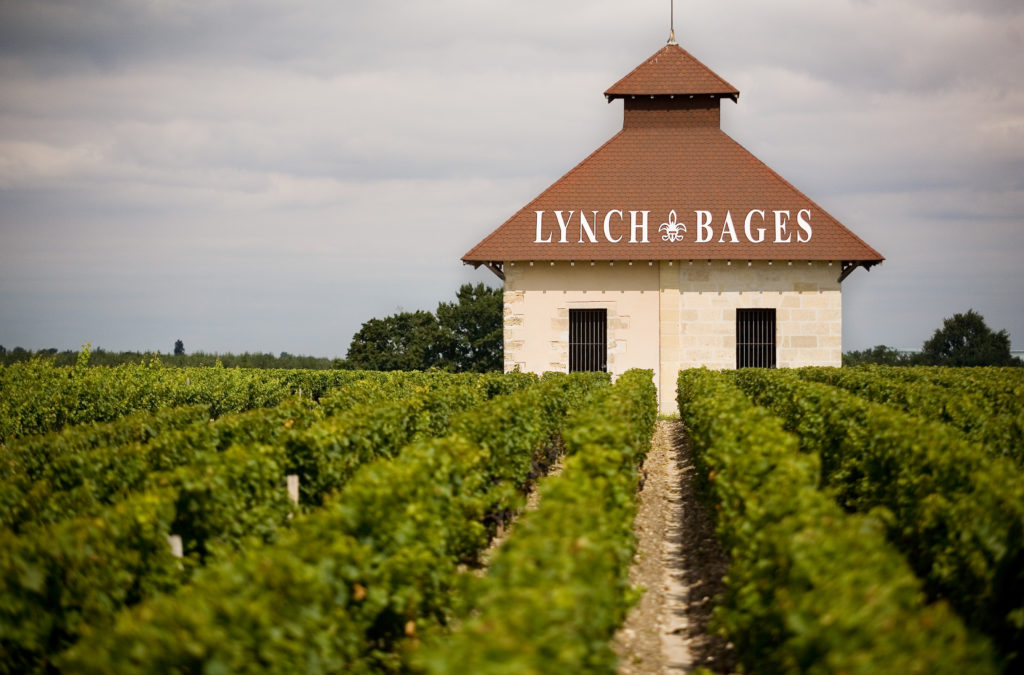
Château Lynch-Bages – Vineyard hut © Château Lynch-Bages
The cellar tells a different story — one of precision and ambition. The winemaking facility is a study in reflective steel and controlled space, impeccably maintained, designed as much for the visitor’s eye as for the winemaker’s hand. Alongside it, works of art collected by the owners from around the world — a giant ram’s head, an octopus in suspended movement — give the space an identity that no technical achievement alone could provide.
At the table in the restaurant, the Blanc de Lynch-Bages 2017 arrives with a dish of quiet generosity: substantial, well-composed, served with the kind of warmth that is rare in a region not always known for it. The service has energy. It has a smile. It has none of the formal tension that can make great Bordeaux estates feel like places one must deserve to enter.
Lynch-Bages has understood something fundamental: that the best wine experience today is not a tasting. It is a world.
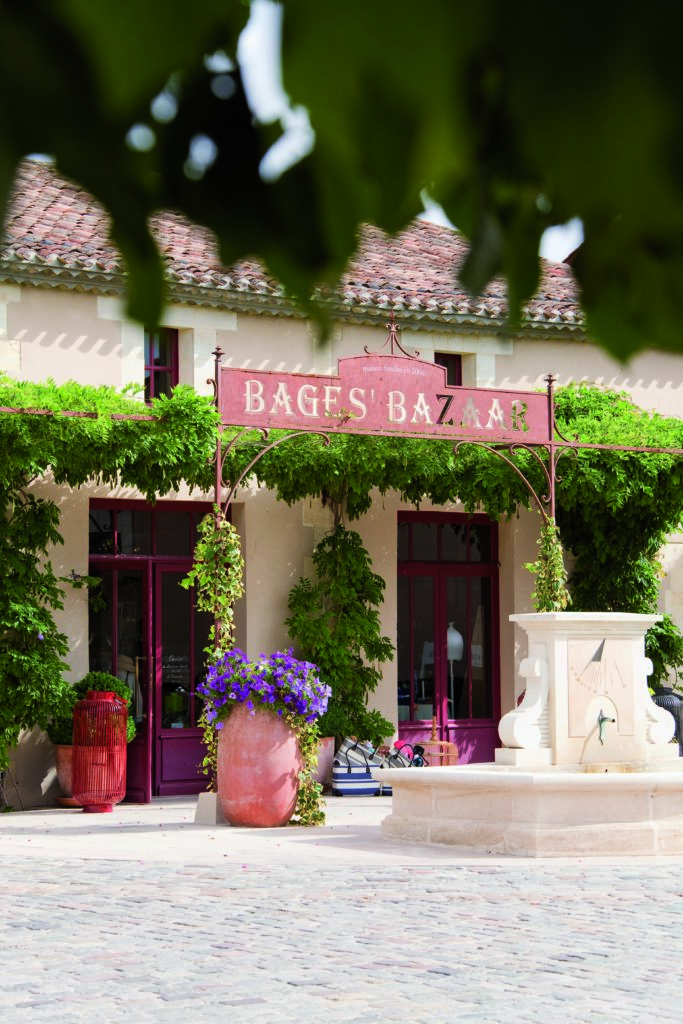
Village de Bages – Bages Bazaar – Sébastien Cottereau © Bordeaux Code 01
Château Pédesclaux: Building an Identity Backwards and Forwards
Château Pédesclaux is perhaps the least immediately recognisable of Pauillac’s classified estates, which makes what it is doing all the more interesting to observe.
The property has been undergoing a profound transformation: a new winemaking facility of glass and stone that places the original historic building at its centre, flanked symmetrically by contemporary wings that feel like extensions of the landscape rather than impositions on it. The balance between old and new is deliberate, almost theatrical — and it works.
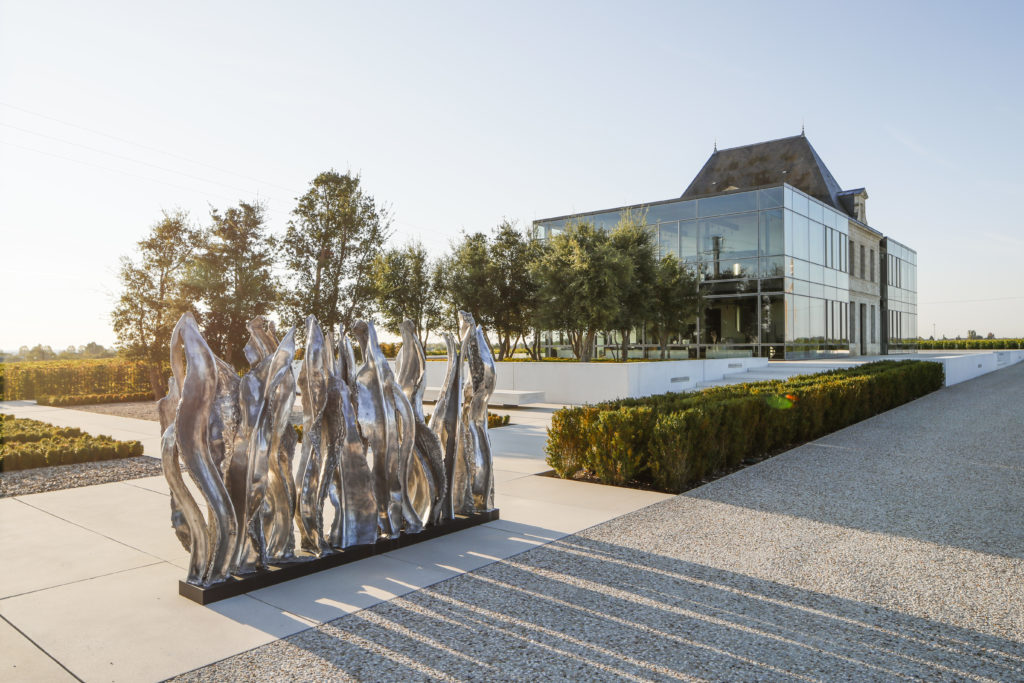
Château Pédesclaux
Inside, the barrel cellar is a space of genuine power. Dark, deep, with art that does not merely decorate but amplifies the mood — a sense of weight and time that is appropriate to what happens in a room full of ageing wine. The stainless steel vats alongside it are surgical in their cleanliness. And the gravity-fed elevator system — a stainless steel vessel that rises and descends to move must without a pump — is the kind of quiet technical elegance that speaks volumes about the seriousness of the project.
What Pédesclaux is doing with its library of old vintages is perhaps its most eloquent statement: actively recovering bottles from around the world to reconstruct its own history. A château that searches for its past in order to build its future is one that understands what heritage actually means — not inheritance, but responsibility.
The visitor experience is still finding its complete voice. But the winery itself is already speaking with great clarity.
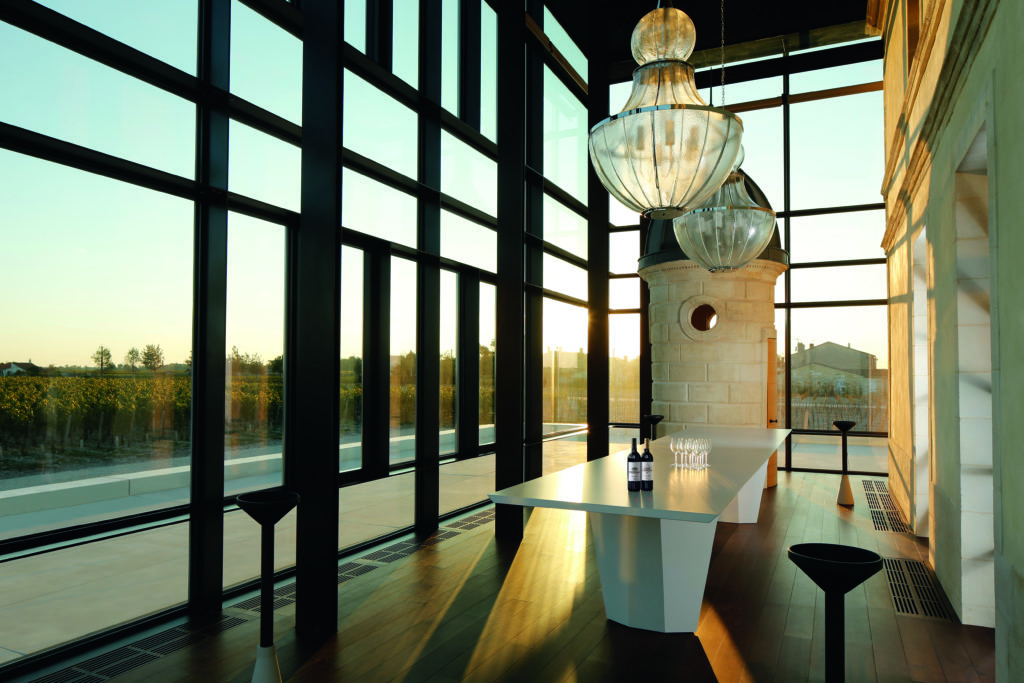
Tasting room of Château Pédesclaux
Château Lagrange: The Japanese Art of Getting Everything Right
Château Lagrange has been owned by Suntory since 1983. Over four decades, that ownership has produced something that is immediately felt upon arrival, even before a single bottle is opened: a precision that is not cold, and a perfection that is not sterile.
The park alone would justify a visit. In autumn — the season I arrived — the trees hold their colour with extraordinary intensity against a sky that seems almost unreasonably blue. The lawns are immaculate. The pathways are exact. The view from the château windows frames the landscape as if it were a painting commissioned for that specific angle of light.
Inside the historic château, the salons are preserved with the fidelity of a family home rather than a museum: Louis XV furniture, crystal chandeliers, silk curtains in gold, Japanese paintings alongside European ones — a dialogue between two cultures of refinement that, here, feels entirely natural.
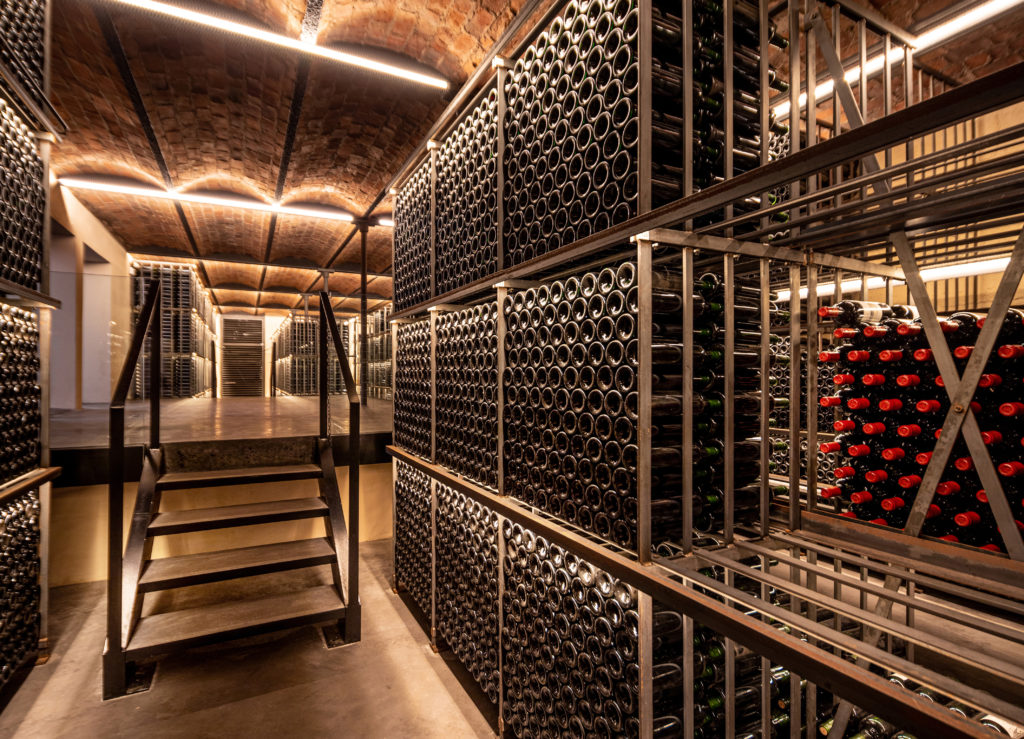
Chateau Lagrange cellars
The winemaking facility extends this logic into industrial scale. A barrel cellar of cathedral proportions, with perspective lines that seem to extend beyond what any single building should contain. A tasting room in clean white with arched windows and a row of large-format bottles lined like a silent honour guard. A chai of stainless steel that gleams without ostentation.
What Suntory brought to Lagrange was not a foreign aesthetic but a shared philosophy: that every detail matters, that nothing should be left to chance, and that the highest form of respect for a great terroir is the discipline to let it express itself without interference.
Of the three châteaux visited, Lagrange offers the most complete execution. Lynch-Bages offers the most life. Pédesclaux offers the most becoming.
All three, in their different ways, are answering the same question that Bordeaux as a whole must continue to answer: what does tradition owe the future?
Practical Information
Château Lynch-Bages — Pauillac. Visits and tastings available. The village of Bages and Café Lavinal are open to the public. bagesvillage.com
Château Pédesclaux — Pauillac. Visits by appointment. chateau-pedesclaux.com
Château Lagrange — Saint-Julien-Beychevelle. Visits by appointment. chateau-lagrange.com
This article is the result of a collaboration between Winelux Business Insider and Great Wine Capitals.
Wine & Luxury Strategist | Founder of Winelux
Brand Ambassador Argentina – International Wine Challenge
Academy Chair – The World’s Best Vineyards
Commandeur d’Honneur – Commanderie du Bontemps
Member of the Experts Panel & Official Correspondent for Great Wine Capitals
Learn more about the Bordeaux Great Wine Capital
Photos provided by Château Lynch-Bages, Château Pédesclaux, Château Lagrange