
In Mainz and Rheinhessen, wine tourism is much more than a leisure activity. It is an economic driver, a connector between urban culture and rural landscapes, and an increasingly important part of regional development.
As Germany’s largest wine growing region, Rheinhessen is shaped by wine in many ways. Vineyards define the landscape, wineries create places of encounter, wine festivals bring communities together, and wine experiences connect visitors with local culture, food, architecture, nature and hospitality. For Mainz and Rheinhessen, the business of wine tourism is therefore not limited to cellar doors or tastings. It reaches hotels, restaurants, event locations, cultural institutions, guides, retailers, transport providers and many other local businesses.
Tourism in the region is strongly connected with wine, wine culture and the wine landscape. In 2025, Rheinhessen recorded 2.03 million overnight stays in accommodation businesses with ten beds or more. In 2023, the region welcomed 27.5 million day visitors. Tourism generated a gross turnover of 1.2 billion euros and supported around 16,450 jobs. Overnight stays have grown by 32 percent since 2015. These figures show a clear upward trend and underline the economic potential of the region.
The average length of stay is still relatively short at 1.8 nights, resulting in a clear business opportunity: if wine tourism can encourage visitors to stay longer, book more experiences, explore more places and return for future visits, the economic impact for the region increases significantly.
This is exactly where Mainz and Rheinhessen are now placing strategic emphasis. The region’s tourism strategy Rheinhessen 2030+ defines wine, hiking, cycling and culture as the key themes for future development. Wine is the connecting element.
One important trend is the move from single experiences to integrated value chains. A visitor may arrive in Mainz for a city break, a business trip or a cultural event, then discover the surrounding wine region, visit a winery, book a guided tour, attend a festival, buy wine to take home and return later for a longer stay. Each step creates value for different businesses. Wine tourism becomes a shared economic ecosystem.

Innovative formats already show how this ecosystem is changing. In Wöllstein, for example, the Bubble Tent at Weingut Müller offers guests an unusual way to spend the night. In Guntersblum, Weingut Domhof has created a wine escape room, combining wine culture with gamification and group experience. Across the region, wineries are also becoming stages for festivals and music events that attract younger audiences and introduce new target groups to wine in a relaxed and contemporary setting.
These formats are important because they show how wine tourism is becoming more experiential.
Accommodation is another key business field. Rheinhessen has identified a need for additional hotel capacity, especially in segments such as active tourism hotels, budget design hotels, wellness hotels, and culture or boutique hotels. At the same time, there is strong potential for distinctive overnight experiences with a clear regional identity. Concepts such as tiny houses, pop up lodges, nature based micro accommodation or wine related stays can help turn the vineyard landscape into a stronger overnight destination.
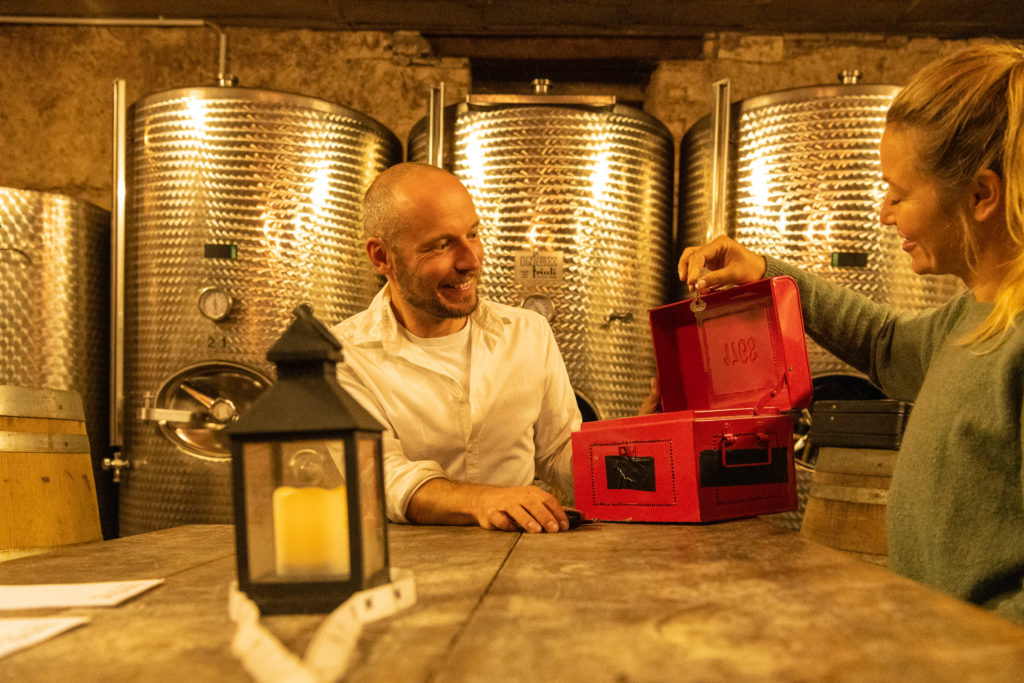
For wineries, this is particularly relevant. In a changing wine market, tourism can become an additional business pillar. Tastings, events, accommodation, guided experiences and direct sales can complement traditional wine distribution and deepen customer relationships.
Mainz adds another business dimension. As the urban centre of the Great Wine Capital Mainz and Rheinhessen, the city brings together culture, meetings, events, gastronomy and international visitors. This creates strong potential in the Bleisure segment, where business travellers extend their stay for leisure experiences. A conference guest in Mainz can become a wine traveller in Rheinhessen within a short distance. Wine tastings, vineyard walks, cultural visits or culinary programmes can turn a business trip into a regional experience and encourage future private visits.
For Mainz and Rheinhessen, the business of wine tourism lies in turning wine culture into long term value: for wineries, for tourism businesses, for cities and villages, for residents and for guests. The region’s strength is its ability to connect people, places and experiences. In wine tourism, this connection becomes an economic opportunity.
Author: Ellen Kneib, Rheinhessen-Touristik GmbH
Photos credits : ©Dominik Ketz / ©Dominik Ketz / ©Dominik Ketz