
Despite their grandiose appearance, some buildings are only about one room deep – it really was all about the façade. Now, visitors to the region want to go deeper and properties are happy to help. There’s a multitude of design-led experiences to inspire visitors throughout the Bordeaux vineyards, from historical to contemporary. The diversity of architecture and design throughout the region showcases this perfectly.
A history of wine and design
Since the 17th century, the architecture of both the city and the surrounding chateaux has created showcases for the wines of the region. But the architectural history of wine goes back even further. There’s so much for historically curious visitors to explore. Bordeaux and its vineyards date back to Roman times. The third century Palais Gallien Amphitheatre, still remains in the centre of the city, and la rue Sainte Catherine, supposedly the longest pedestrian shopping street in Europe, follows the path of an old Roman road from North to South. There are still some Roman remains in the vines, mostly in Saint Emilion.
The wave of prosperity following the marriage of Eleanor of Aquitaine to Henry Plantagenet and the resulting English thirst for ‘Claret’, created stunning Medieval architecture. The Cathedral Saint-André, where Eleanor married her first husband Louis VII in 1137, and two medieval gates built under the English ‘occupation’ escaped the 17th century redevelopment of the city and can still be visited today.
Serious wealth arrived in the 17th century; Bordeaux was France’s largest port and it exhibited this prosperity for all to see, building the beautiful waterfront of Bordeaux. Bordeaux remains one of Europe’s largest 18th century architectural centres, and a UNESCO World Heritage site. At its heart is La Place de la Bourse, built in 1755 by Ange-Jacques Gabriel. Today it is reflected in Le Miroir d’Eau, the largest reflecting pool in the world.
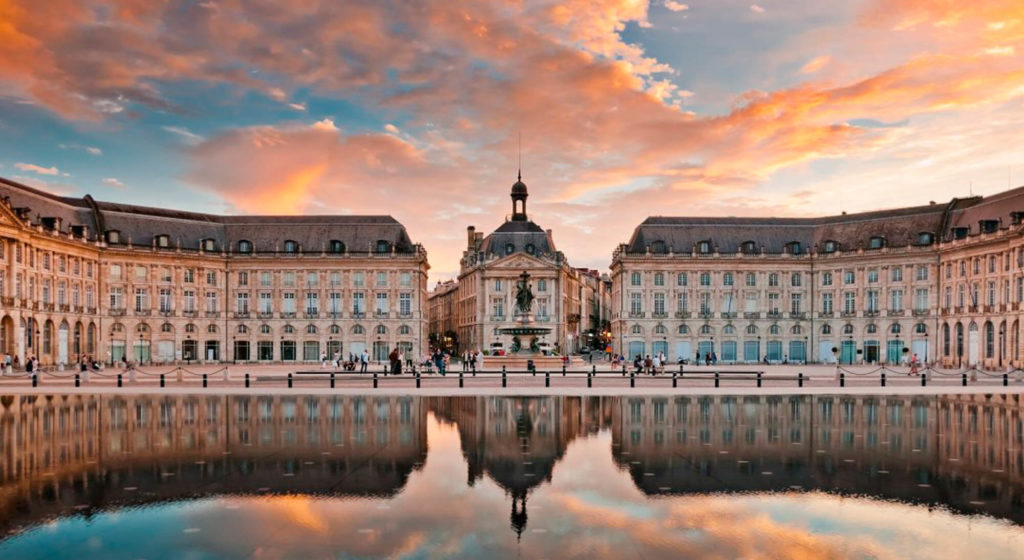
Place de la Bourse, Bordeaux, ©OTCBM
A marriage of old and new that we see repeated in the chateaux and wineries. The ort and the wine brought wealth and ‘new money’ created architectural gems throughout the region, used as showcases for the wealth, power and their wines of the families.
Designed to work
Today the challenge is to design cellars that are more than a place to make wine, they are an intimate part of the visitor experience. The cellar becomes a stage to share the whole wine making journey, a fully functioning wine making facility with the visitor experience at its centre.
Back to the future
In an old wine making region like Bordeaux, there’s also the challenge of embracing the latest technology without losing the historical soul of the place. Although new cellars may be made of ultra-modern glass and steel, the basic functions of selecting, preserving, fermenting and ageing have remained remarkably similar over the years. Never more so than today, when alongside new techniques, there’s a return to more traditional methods such as gravity feed, eschewing pumps and amphora replacing barrels with a desire to emphasise freshness.
Diversity
The multitude of different materials and shapes of vats for wine making and ageing means no two cellars are the same. It makes a Bordeaux wine tour even more intriguing, each property has its own ‘show and tell’, a working model that explains the technical choices they have made.
As soils are carefully analysed and understood, smaller and more precise plots within vineyards allow precision viticulture. These smaller plots mean more and smaller vats in the cellars, allowing this expression of ‘terroir’ to be carried from field to cellar, to barrel and to bottle. This in turn has led to design challenges as chateaux find ways to accommodate more vats.
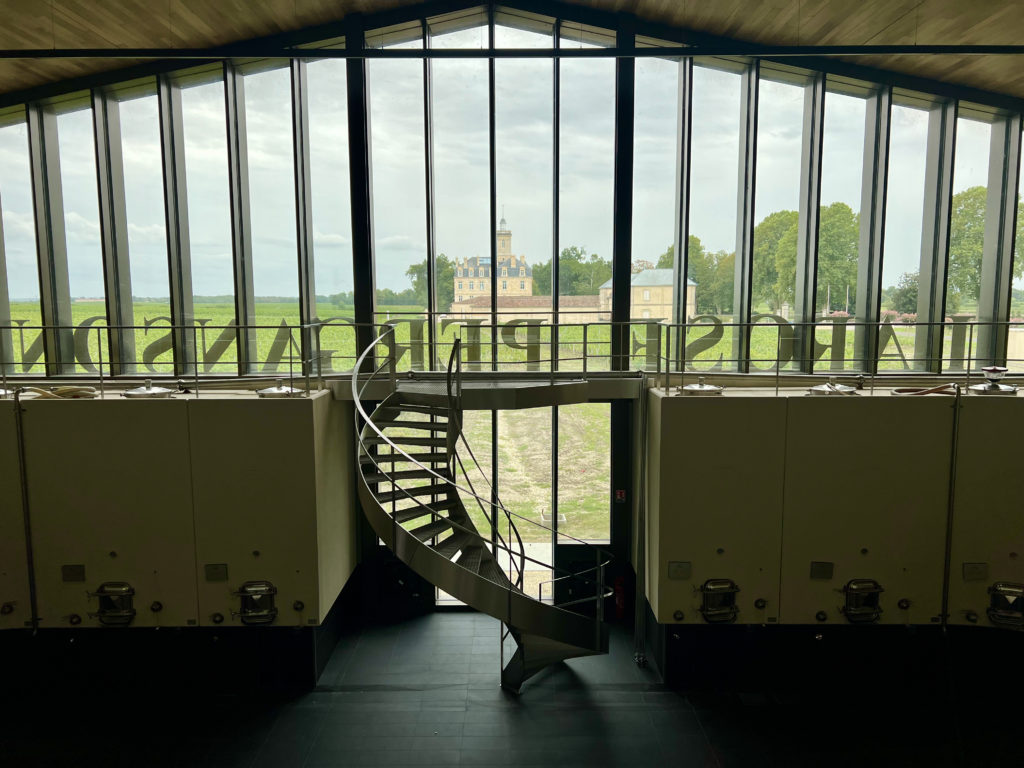
Vignobles Larose Cellar
2026 Best Of Wine Tourism winner, Les Vignobles de Larose is the perfect example. The new cellars, delivered in 2023, have vats less than half the size of the previous ones reflecting a reduction in plot size. The property seized the opportunity of this new build to also rethink the visitor experience. Raised walkways allow guests access to the impressive new cellars, even during the busy harvest time.
Ancient and Modern
Barrel Cellar Beychevelle ©W.Narby
Chateau Beychevelle in Saint Julien, known as the Versailles of the Medoc, is a perfect example of the marriage of old and new. It was built in 1757, in the classic Chartreuse style of Bordeaux on the banks of the Gironde estuary, as a representation of the wealth and status of the then owner, the Marquis de Brassier. Under the current owners, Grands Millésimes de France, the beautiful Chateau has been restored specifically to welcome guests who can now dine and sleep in 17th century splendour. However, crossing the courtyard into the cellars, you are transported straight into the 21st century. The design, technical wine making and a low carbon footprint come together in a stunningly functional glass and metal winery.
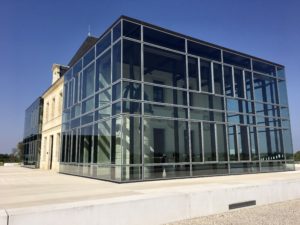
©Chateau Pedesclaux
Another striking Medoc example is Chateau Pedesclaux, in Pauillac. When they decided to create more space to receive guests, instead of a classic extension they built a glass case around the entire chateau. They even incorporated the dovecote into the new tasting room.
©Chateau Pichon Longeville Baron
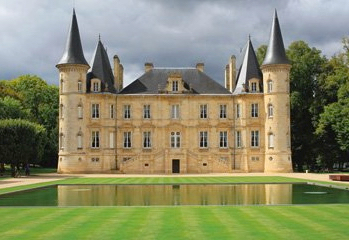
The new visitor centre at Château Pichon Baron was also designed to welcome more guests. It includes tasting and banqueting rooms and a boutique. The floor to ceiling glass walls look directly over the original 18th century chateau to one side and the vines to the other, the perfect backdrop to illustrate the history of the property and its unique terroir whilst enjoying wine made in the cellars below.
©Chateau Gruaud Larose
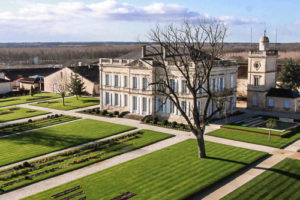
Ever since the 1700s, Chateau Gruaud Larose has had a round stone tower at its centre, a place from which to survey the large vineyard. As the original tower was deemed unsafe for visitors, they built a new one in 2015. An integral part of their new visitor centre. At 18m high, the platform at the top of this metal tower offers visitors a breath-taking view of the whole of the appellation of Saint Julien, most of Pauillac and across the estuary to the right bank. It is one of the best and most educational views in Bordeaux, designed for visitors to perfectly understand the lay of the land from above.
©Chateau Balestard La Tonnelle
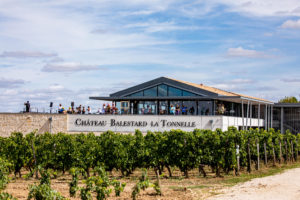
There’s another educational view on right bank at Chateau Balestard la Tonnelle in Saint Emilion. When they built their new cellar, on a high point of the appellation the roof became a terrace. From here they share a 360° view of the vines of Saint Emilion, but also Pomerol, the Saint Emilion Satellites and even as far as Fronsac. Designed first as a functional wine cellar, the terrace became a perfect venue to taste and to host large events.
Incorporating family history
©Chateau Marquis d’Alesme
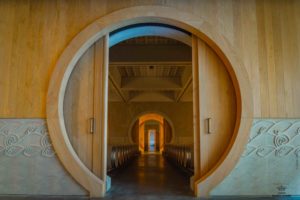
When the Perrodo family purchased Château Marquis d’Alesme in 2006, they had to start from scratch to build a winery. And what a winery: functional but also beautiful, it is inspired by their dual Chinese and French heritage: a Zen cellar to make, age and share the wine from the estate. They also share their passion through the sensory gardens and casual restaurant. Two different cultures one shared passion.
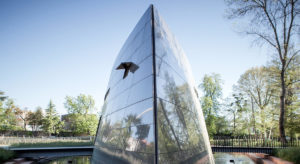
©Chateau Les Carmes Haut Brion
Closer to Bordeaux, the 2019 Best Of Wine Tourism winner Chateau les Carmes Haut Brion is another, if very different, example of creating a completely new cellar. The owner, Pichet, commissioned designer Philippe Starck to create a very original new building. It resembles a ship sailing on water, with the wine making vats above the barrel cellar for gravity feed, and a guest terrace and tasting room that sit above it all.
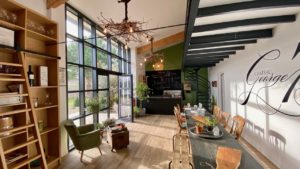
©Chateau George 7
A Bordeaux winery doesn’t have to be grandiose to offer a warm welcome. At Château George 7 (2022 Best Of Wine Tourism winner) in Fronsac, there was no chateau, just a worker’s cottage and a tractor shed next to the tiny winery. The tractor shed is now transformed into a fun, multi-functional space, the design inspired by owner Sally Evans’ trips to new world wineries. Relaxed visitor experiences include tastings, lunches and dinners enjoyed on a terrace with a view of the sun setting over the vines to the West.
Designing a space to stay
The town of Saint Emilion sits on top of approximately 200 kilometres of underground tunnels and quarries, used for centuries to extract the limestone to build the town and surrounding villages. Château Villemaurine is one property built directly above these quarries. They use them to age the wine and to share the history of the town and its wine with visitors. Now, the chateau is transformed into a stunning, small hotel, La Villa des Vignes. The theme of limestone runs throughout the décor from the outdoor terrace and indoor pool overlooking the vines, to the reception rooms and even the en-suite bathrooms.
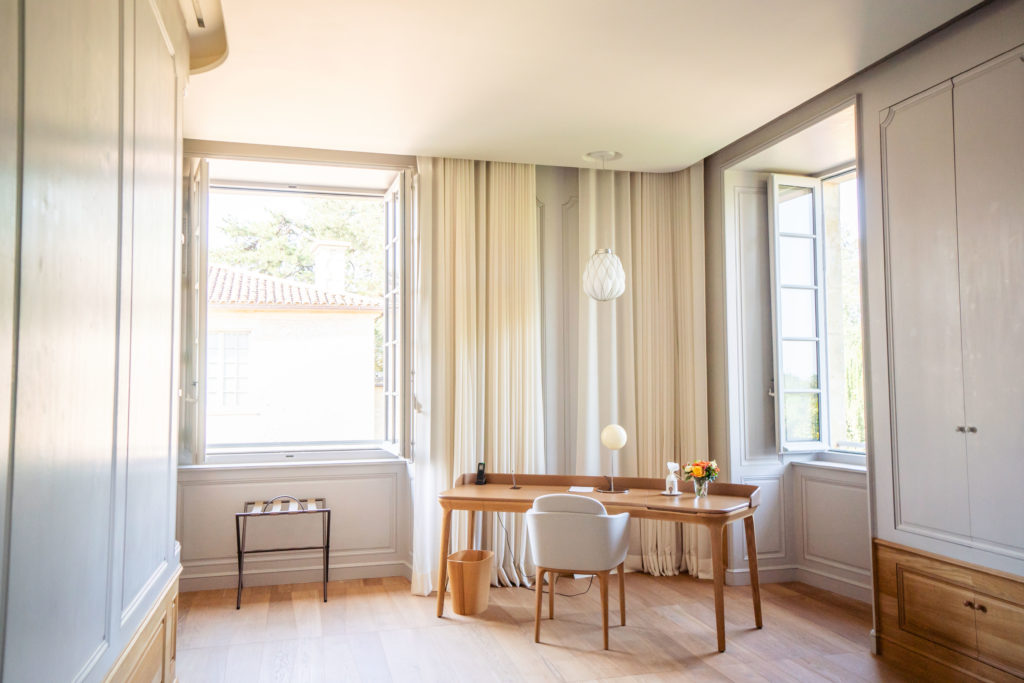
Chateau de Ferrand ©Adrien Viller
There are other stunningly designed guests rooms hidden away in Saint Emilion châteaux. Thanks to the Bich family’s passion for contemporary art, 2026 Best Of Wine Chateau de Ferrand is very design driven with works from the Bic Art collection throughout the chateau. Their three guests rooms, beautifully renovated in 2019 by the designers Patrick Jouin and Sanjit Manku, offer the perfect opportunity to immerse yourself in the contemporary space.
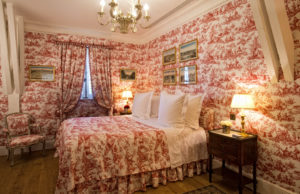
©Chateau Soutard
If you prefer a more classical experience, the Oberkampf suite in the majestic 2026 Best Of Wine Tourism winner Château Soutard will take you back to the 18th century. With breakfast the next morning served in the original chateau kitchens.
Home from home
A less grandiose, but nevertheless stunning welcome awaits at Chateau Sigalas Rabaud in Sauternes. Here, owner-winemaker, Laure de Lambert has converted the family home into the perfect guest house. She has cleverly kept the feeling of a private home with each of the five guests rooms decorated with an eclectic mix of traditional and contemporary.
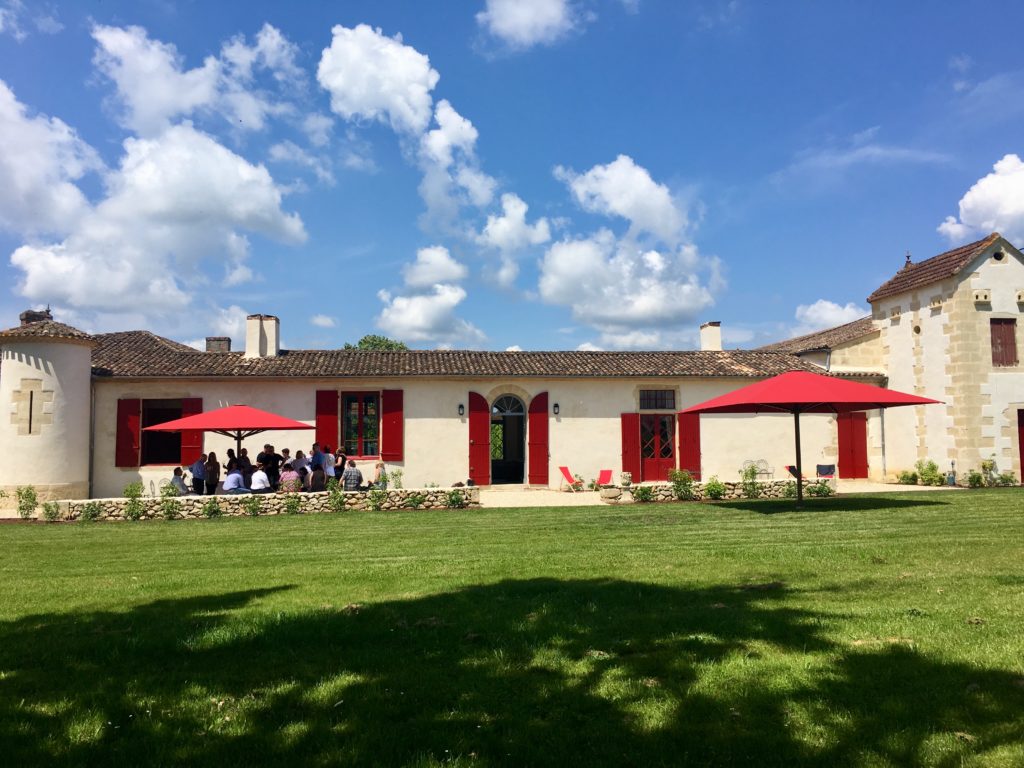
©Sigalas Rabaud terrace
We can’t finish a look at Bordeaux design without coming back to the city, to the stunning Cité du Vin that has dominated the waterfront of Bordeaux since 2015. It brings us full circle, back to the quays where wine was shipped across the world.
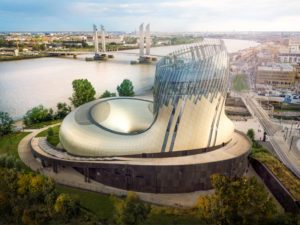
©La Cité du Vin
Today the same waterfront welcomes visitors back as they sail past the golden Cité du Vin and under the iconic vertical-lift bridge the ‘Pont Jacques Chaban-Delmas’ to alight from cruise ships into the historical heart of the region.
Author: Wendy Narby for Great Wine Capitals

featured image photo credits : ©Chateau Pedesclaux